Physical Address
304 North Cardinal St.
Dorchester Center, MA 02124
Physical Address
304 North Cardinal St.
Dorchester Center, MA 02124
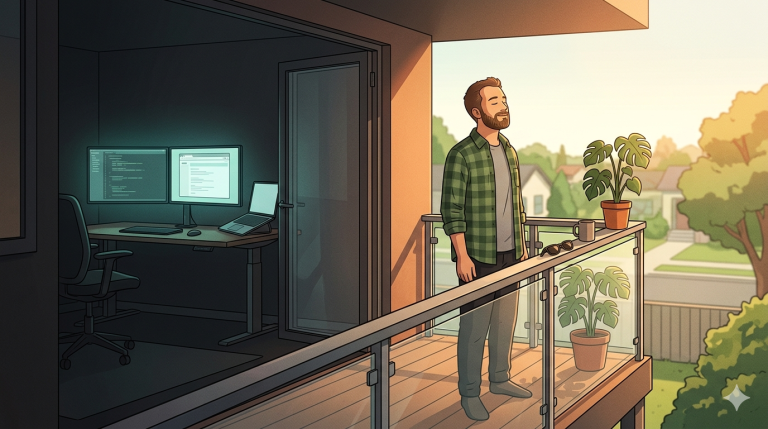
One of the hardest parts of working from home is that the “office” and the “home” are often the exact same square footage. When your kitchen table is your boardroom and your bedroom is your breakout space, the psychological lines between stress and sleep become dangerously blurred. Your brain doesn’t have the benefit of a physical commute to “leave work behind,” so you often find yourself lying in bed with your mind still hovering over the tasks you left on your desk just twenty feet away.
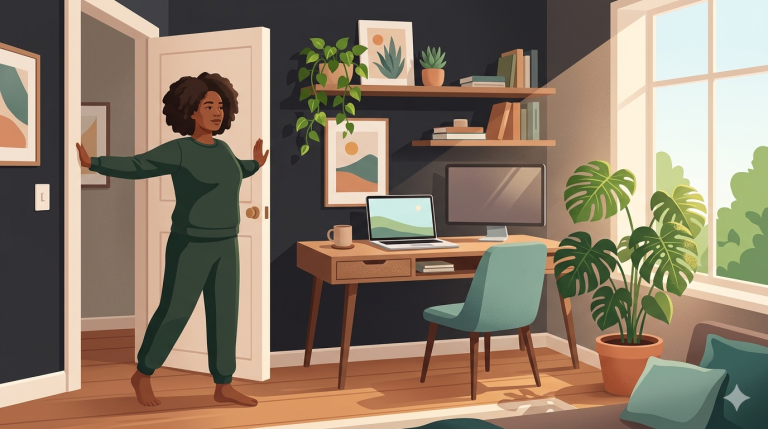
Without a clear transition, the high-pressure energy of your workday bleeds into your evening, making your home feel like a place of perpetual “doing” rather than a sanctuary of “being.” You need more than just a closed laptop to shut down; you need a psychological bridge that signals to your nervous system that it is safe to down-regulate. You need to reclaim your space, turning your office into a zen sanctuary through intentional, gentle movement.
Evening yoga is that bridge. It’s a ten-minute ritual that allows you to physically and mentally “decompress” from the digital world and anchor yourself back into your body. By synchronizing your breath with slow, restorative poses, you clear the mental cache of your workday and prepare your brain for the deep recovery of sleep. Let’s look at how to build your bridge from the office to the dreamworld.
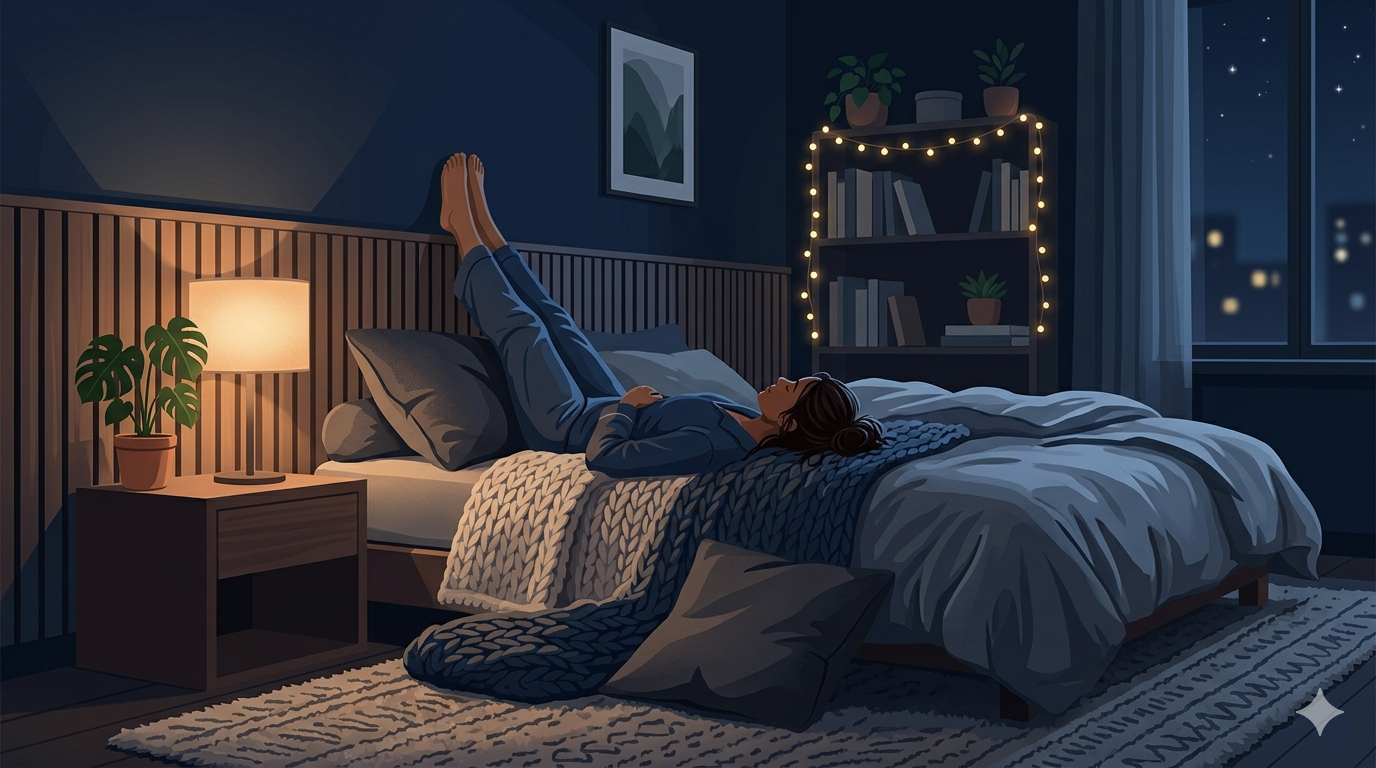
One of the most powerful poses for the sedentary remote worker is Viparita Karani, or “Legs Up the Wall.” When you sit at a desk all day, blood and lymphatic fluid can pool in your lower extremities, leading to a feeling of “heaviness” and restlessness in your legs at night. By reversing the effects of gravity, you encourage venous return to the heart and brain. This pose is also a potent trigger for the relaxation response. It stretches the hamstrings and lower back while allowing the upper body to completely relax. It is the physical equivalent of a “deep exhale” for your circulatory system. Just five minutes in this position can lower your sympathetic nervous system activity and prepare your brain for the glymphatic drainage that occurs during sleep. It is a simple, non-strenuous way to reverse the physical tolls of your sedentary workday and set the stage for total recovery.
In a world of constant digital connectivity, our attention is always pulled outward. We are constantly reacting to emails, notifications, and virtual requests. Balasana, or Child’s Pose, provides a necessary “inward turn.” By folding your body forward and resting your forehead on the ground (or a pillow), you are physically withdrawing from the external world. This posture creates a sense of safety and enclosure, which is deeply soothing to an overstimulated brain. It also gently stretches the lower back and hips, areas where remote workers tend to hold significant tension. If you have been practicing the techniques in our guide on Progressive Muscle Relaxation, you will find that Child’s Pose is the perfect container for that mental release. It is a posture of surrender, signaling to your ego that the workday is done and the time for rest has arrived.
How effective is your current “shutdown” routine? Rate yourself on a scale of 1 to 5 based on your typical evening:
If you are at a 1 or 2, your transition is likely too jarring for your nervous system. The goal is to reach level 5 by implementing a non-negotiable ten-minute “bridge” routine every single night.
Your evening yoga should be the opposite of your workday. While your work is fast, reactive, and mentally taxing, your yoga should be slow, intentional, and physically grounding. The pillar of the “Slow Flow” involves moving between poses with extreme deliberation. Each movement should take at least one full breath cycle. This slow pace forces your brain to detach from the “digital speed” of your office and synchronize with the “biological speed” of your body. It is a form of moving meditation that clears the mental “cache” of your workday. By the time you finish, your heart rate should be lower, your breath should be deeper, and your mind should be quieter. This is the optimal state for sleep onset.
The secret to yoga’s power is the breath. The pillar of “Diaphragmatic Synchronization” means that every movement is led by the breath. As you inhale, you create space; as you exhale, you settle into the pose. Deep, diaphragmatic breathing—where your belly expands rather than your chest—is the fastest way to activate the parasympathetic nervous system. It physically massages your internal organs and signals to your brain that you are safe. For remote workers who spend the day “holding their breath” during stressful calls, this is a vital correction. By synchronizing your movement with your breath, you are rewiring your nervous system for peace. This rhythmic breathing often carries over into your sleep, leading to a more stable and restful night.
Don’t be afraid to use props—pillows, blankets, or blocks. The pillar of “Prop-Supported Stillness” is about removing all physical effort from the poses. In your evening routine, you are not trying to “achieve” a stretch; you are trying to “allow” a release. Using a pillow under your chest in Child’s Pose or a folded blanket under your hips in Legs Up the Wall makes the poses more accessible and more comfortable. This comfort is essential for relaxation. When your body feels fully supported, it can stop “guarding” against perceived stress. This deep support allows your muscles to truly let go of the “body armor” we discussed in our guide on desk stretches. It is the ultimate preparation for the weightlessness of sleep.
Every routine must end with Savasana, or Corpse Pose. This is not just “lying down”; it is a conscious practice of total stillness. The pillar of “Savasana Finality” is the most important part of the routine. For three to five minutes, lie flat on your back, close your eyes, and do nothing. Let your breath return to its natural rhythm and feel the physical weight of your body on the floor. This is the final “save” button on your day’s work. It allows your nervous system to integrate the benefits of the movement and provides a clear mental boundary. When you rise from Savasana, the “work version” of you is officially offline. You are now ready to enter your sleep sanctuary.
Building a bridge between your digital life and your biological life is the highest form of self-care for a remote professional. Your brain is a high-performance machine, and like any machine, it requires a proper “cool-down” period to maintain its longevity. By dedicating just ten minutes to this evening yoga routine, you are ensuring that your sleep is not just “time spent unconscious,” but true, deep recovery. Tomorrow, we transition into our final week of Month 5, where we will look at how your sleep habits directly impact your long-term weight management and metabolic health. For now, move slowly, breathe deeply, and enjoy the peace you have created. Namaste, and sleep well.