Physical Address
304 North Cardinal St.
Dorchester Center, MA 02124
Physical Address
304 North Cardinal St.
Dorchester Center, MA 02124
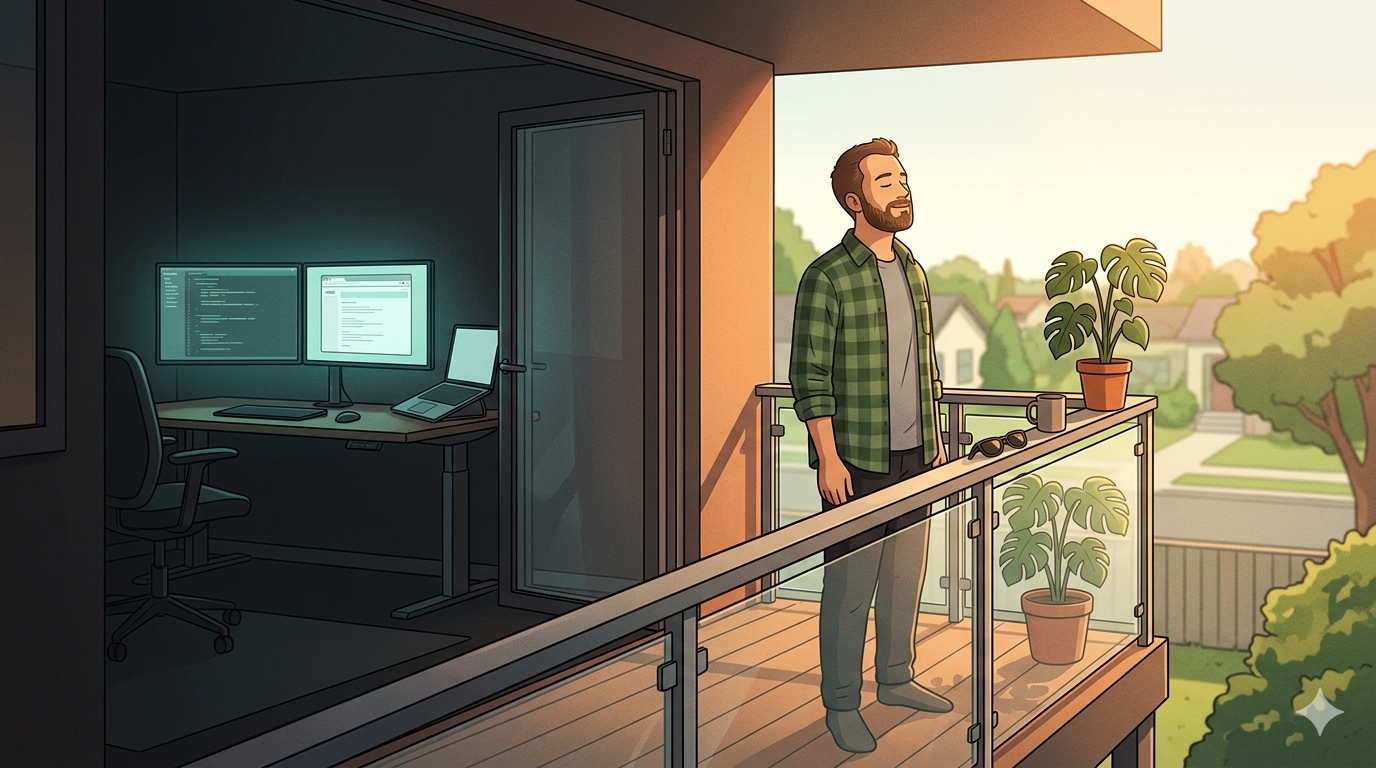
The sun is shining outside your window, but you wouldn’t know it. You are deep into a spreadsheet, the blue light of your dual monitors casting a synthetic glow across your face. It is 2:00 PM on a Tuesday. You feel that familiar, heavy fog settled behind your eyes. You’ve had your coffee. You slept seven hours last night. Yet, you feel like you’re walking through waist-deep water. This isn’t just “work fatigue” or a lack of willpower. It is a biological SOS from a body starved of its most primal fuel: sunlight. For the modern remote worker, the home office has become a gilded cage. We have traded the commute for convenience, but in the process, we have severed our connection to the “Sunshine Vitamin.” Consequently, our sleep is paying the ultimate price.
Vitamin D is not actually a vitamin; it is a pro-hormone. It acts as a master key for over 1,000 different physiological processes. When your levels drop, your sleep architecture begins to crumble from the inside out. You might be “sleeping,” but you aren’t recovering. Therefore, understanding the science behind this deficiency is the first step toward reclaiming your energy. Let’s dive into why your indoor lifestyle is sabotaging your nights.
Your brain’s internal clock, the suprachiasmatic nucleus (SCN), relies on specific signals to know when to be alert and when to rest. While light entering the eyes is the primary signal, Vitamin D receptors (VDRs) are found throughout the brain’s sleep-wake centers. Research from institutions like the Mayo Clinic suggests that Vitamin D plays a crucial role in maintaining the health of the hypothalamus. This is the region responsible for regulating your circadian rhythm.
Specifically, Vitamin D helps modulate the expression of “clock genes.” These genes dictate the timing of your sleep cycles. When Vitamin D is deficient, these genes become “muffled.” Consequently, your body loses its ability to distinguish between day and night. This leads to that “tired but wired” sensation. You feel sleepy during your Zoom calls but wide awake when your head hits the pillow. Furthermore, low levels of Vitamin D are strongly correlated with shorter sleep duration.
We often talk about melatonin as the “sleep hormone,” but it doesn’t work in a vacuum. Vitamin D is a vital co-factor in the synthesis of serotonin, which is the direct precursor to melatonin. Think of Vitamin D as the foreman on a construction site. Without the foreman, the raw materials (tryptophan and serotonin) cannot be converted into the finished product (melatonin).
Studies published by the Vitamin D Council have highlighted that individuals with higher Vitamin D levels tend to produce melatonin more efficiently at night. Conversely, those with a deficiency often experience delayed melatonin onset. This means even if you turn off your lights at 10:00 PM, your brain might not start the “sleep countdown” until midnight. Additionally, Vitamin D helps regulate inflammation in the brain. Chronic inflammation is a known disruptor of deep sleep.
Beyond general insomnia, Vitamin D deficiency is a major risk factor for specific sleep disorders. For instance, there is a significant link between low Vitamin D and Obstructive Sleep Apnea (OSA). Vitamin D acts as an anti-inflammatory agent in the upper respiratory tract. When levels are low, tissues can become more prone to swelling, increasing the risk of airway obstruction. Moreover, researchers have found that Vitamin D supplementation can improve the severity of Restless Leg Syndrome (RLS).
If you’ve ever felt that “creepy-crawly” sensation in your legs while trying to drift off, you know how devastating it can be. This is often tied to dopamine regulation, which Vitamin D helps manage. By addressing the deficiency, you aren’t just improving “sleep quality”; you are treating the underlying mechanical issues that keep you awake. It is about building a foundation of health that allows sleep to happen naturally, rather than forcing it with pills.
Before we move to the solutions, let’s see where you stand. Rate your experience on a scale of 1 to 5 for each of the following statements (1 = Never, 5 = Always).
Scoring:
Fixing a Vitamin D deficiency isn’t as simple as sitting by a window for five minutes. For a remote worker, it requires a strategic, multifaceted approach. These four pillars will help you rebuild your levels and restore your sleep.
For most indoor workers, supplementation is not optional; it is a necessity. However, you must be smart about it. Always opt for Vitamin D3 (cholecalciferol) rather than D2, as D3 is significantly more effective at raising blood levels. Furthermore, you should never take Vitamin D in isolation. It works synergistically with Vitamin K2 and Magnesium. Vitamin K2 ensures that the calcium absorbed by Vitamin D goes to your bones rather than your arteries. Meanwhile, Magnesium is required to convert Vitamin D into its active form.
The sun is your best friend, but you have to meet it on its own terms. To optimize Vitamin D synthesis, you need “midday sun” when UVB rays are strongest. For most remote workers, this means taking a 15-minute “sun break” at noon. Open your door, step onto your balcony, or walk to the corner. Expose as much skin as possible (arms and legs are ideal) without burning. Importantly, don’t rely on windows. Standard glass blocks nearly 100% of UVB rays.
While the sun is the primary source, you can support your levels through your diet. Focus on “fatty” sources, as Vitamin D is fat-soluble. Wild-caught salmon, mackerel, and sardines are excellent choices. If you are plant-based, look for UV-treated mushrooms or fortified plant milks. However, remember that food alone is rarely enough to fix a clinical deficiency. Think of your diet as the “maintenance crew” that keeps your levels steady once the sun and supplements have done the heavy lifting.
You cannot manage what you do not measure. I highly recommend getting a 25-hydroxy Vitamin D blood test at least twice a year. Aim for a level between 40 and 60 ng/mL. Many “standard” labs consider 30 ng/mL to be sufficient, but for optimal sleep and cognitive function, higher levels are often better. Use a Sleep Quality Monitoring tool to track how your rest improves as your D levels rise.
Now that we’ve mastered the “Sunshine Vitamin,” we need to talk about the “Master Mineral.” Next week, we kick off Month 6 with a comprehensive review of our journey so far, followed by a deep dive into Magnesium—the ultimate relaxation tool for the high-stress remote worker.