Physical Address
304 North Cardinal St.
Dorchester Center, MA 02124
Physical Address
304 North Cardinal St.
Dorchester Center, MA 02124
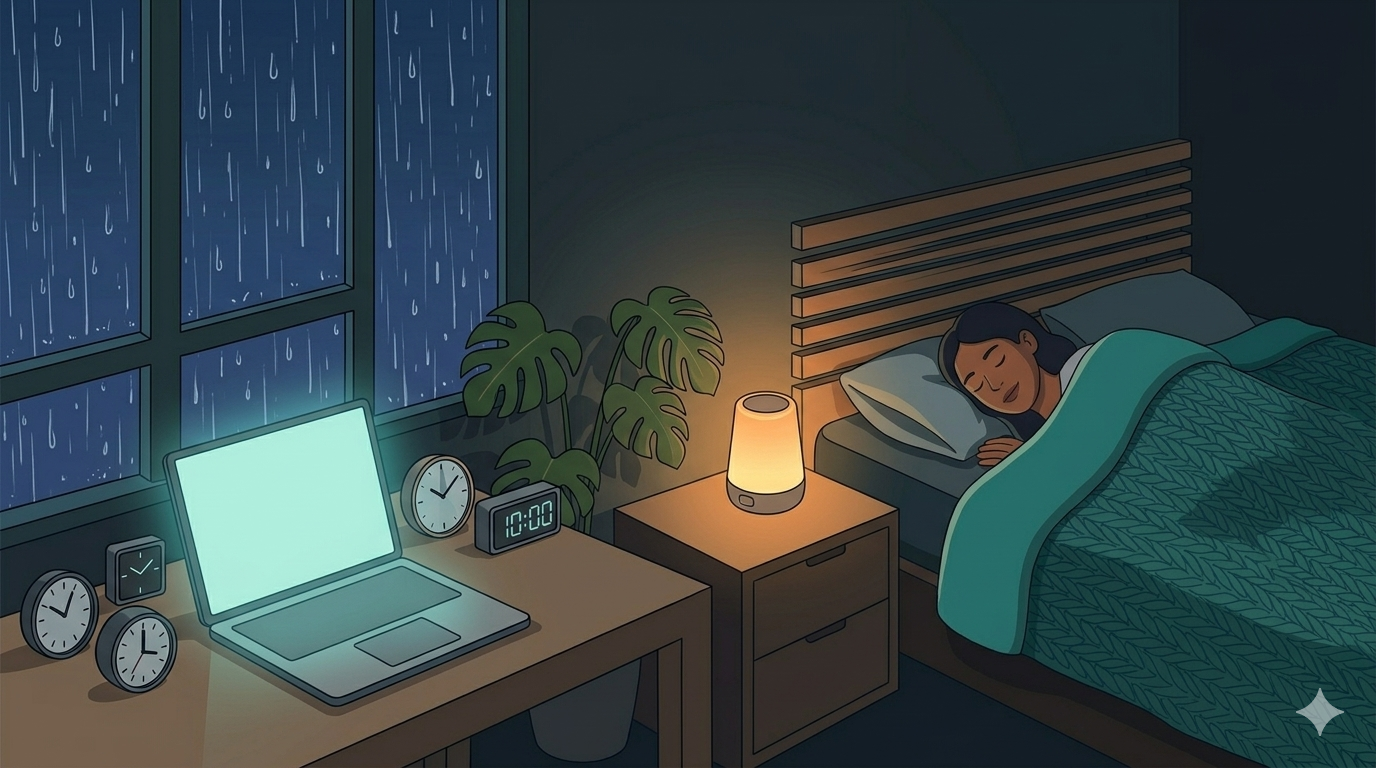
It’s 11:30 PM in San Francisco. You’re ready for bed. But in London, it’s 7:30 AM, and your team is just starting their morning stand-up. In Singapore, it’s 2:30 PM, and the project manager is asking for an urgent update on the sprint. Implementing effective time zone sleep strategies is the only way to survive this 24-hour cycle.
For the remote worker on a global team, “standard business hours” are a myth. Consequently, you live in a world where the sun is always rising somewhere. Therefore, the pressure to be available across multiple time zones is constant. You find yourself taking meetings at midnight. Additionally, you might respond to Slack pings at 6:00 AM. Usually, you try to “squeeze in” a nap during the only three-hour window when the world seems quiet.
This isn’t just a logistical headache; actually, it’s a biological disaster. When you work across time zones, you are effectively putting your body into a state of chronic jet lag. Furthermore, you are doing this without ever leaving your house. Your circadian rhythm is being pulled in multiple directions. Consequently, this leads to fragmented sleep and cognitive fog. Eventually, you feel “out of sync” with your own environment.
Tonight, we’re going to explore the mechanics of “Digital Jet Lag.” Additionally, we will provide a tactical framework for managing a global work schedule. Ultimately, this protects your biological requirement for consistent, high-quality sleep.
Your body’s internal clock is “entrained” by light and social cues. When you take a meeting in the middle of the night, you are exposing yourself to blue light. Specifically, you are engaging in high-level cognitive work when your body is programmed for recovery.
This creates “Social Jet Lag.” Specifically, it is a misalignment between your biological clock and your professional requirements. Research published in The Lancet has shown that chronic circadian disruption is linked to metabolic dysfunction. For global remote workers, the risk is even higher. Furthermore, the “travel” is invisible. You don’t have the physical cues of a long-haul flight. Therefore, you just feel tired and assume it’s the coffee. As we discussed in our guide on Work-Life Balance and Sleep, managing this transition is critical for long-term health.
The biggest threat of time zone chaos is sleep fragmentation. If you are waking up at 4:00 AM for a meeting, you are disrupting your sleep architecture. Specifically, you are likely missing out on critical REM sleep. Alternatively, you might miss deep slow-wave sleep.
Fragmented sleep is significantly less restorative than consolidated sleep. Furthermore, your brain never fully completes its “cleaning” cycle. Consequently, this leads to the “brain fog” that so many global remote workers experience. Therefore, prioritizing consolidated rest is a vital part of any time zone sleep strategies.
Is your global team stealing your local rest? Score yourself on a scale of 1-5 for each statement (1 = Never, 5 = Every Day).
Scoring Your Stress:
If your work schedule is irregular, you must use light to anchor your circadian rhythm.
You must define a 4-hour “Anchor Window” where you are never available for work.
Let your technology be the “bad guy.”
The pressure to be available 24/7 is often internal.
It’s 11:30 PM in San Francisco. You’re ready for bed. But in London, it’s 7:30 AM, and your team is just starting their morning stand-up. In Singapore, it’s 2:30 PM, and the project manager is asking for an urgent update on the sprint. Implementing effective time zone sleep strategies is the only way to survive this 24-hour cycle.
For the remote worker on a global team, “standard business hours” are a myth. Consequently, you live in a world where the sun is always rising somewhere. Therefore, the pressure to be available across multiple time zones is constant. You find yourself taking meetings at midnight. Additionally, you might respond to Slack pings at 6:00 AM. Usually, you try to “squeeze in” a nap during the only three-hour window when the world seems quiet.
This isn’t just a logistical headache; actually, it’s a biological disaster. When you work across time zones, you are effectively putting your body into a state of chronic jet lag. Furthermore, you are doing this without ever leaving your house. Your circadian rhythm is being pulled in multiple directions. Consequently, this leads to fragmented sleep and cognitive fog. Eventually, you feel “out of sync” with your own environment.
Tonight, we’re going to explore the mechanics of “Digital Jet Lag.” Additionally, we will provide a tactical framework for managing a global work schedule. Ultimately, this protects your biological requirement for consistent, high-quality sleep.
Your body’s internal clock is “entrained” by light and social cues. When you take a meeting in the middle of the night, you are exposing yourself to blue light. Specifically, you are engaging in high-level cognitive work when your body is programmed for recovery.
This creates “Social Jet Lag.” Specifically, it is a misalignment between your biological clock and your professional requirements. Research published in The Lancet has shown that chronic circadian disruption is linked to metabolic dysfunction. For global remote workers, the risk is even higher. Furthermore, the “travel” is invisible. You don’t have the physical cues of a long-haul flight. Therefore, you just feel tired and assume it’s the coffee. As we discussed in our guide on Work-Life Balance and Sleep, managing this transition is critical for long-term health.
The biggest threat of time zone chaos is sleep fragmentation. If you are waking up at 4:00 AM for a meeting, you are disrupting your sleep architecture. Specifically, you are likely missing out on critical REM sleep. Alternatively, you might miss deep slow-wave sleep.
Fragmented sleep is significantly less restorative than consolidated sleep. Furthermore, your brain never fully completes its “cleaning” cycle. Consequently, this leads to the “brain fog” that so many global remote workers experience. Therefore, prioritizing consolidated rest is a vital part of any time zone sleep strategies.
Is your global team stealing your local rest? Score yourself on a scale of 1-5 for each statement (1 = Never, 5 = Every Day).
Scoring Your Stress:
If your work schedule is irregular, you must use light to anchor your circadian rhythm.
You must define a 4-hour “Anchor Window” where you are never available for work.
Let your technology be the “bad guy.”
The pressure to be available 24/7 is often internal.
Global work requires global discipline. This week, your mission is to define your “4-Hour Anchor Window”. Additionally, communicate it to your immediate team.
Coming Up Next: We’re wrapping up the month with Burnout and Sleep. Specifically, we’ll look at how to recover when you’ve hit the wall. Steps