Physical Address
304 North Cardinal St.
Dorchester Center, MA 02124
Physical Address
304 North Cardinal St.
Dorchester Center, MA 02124
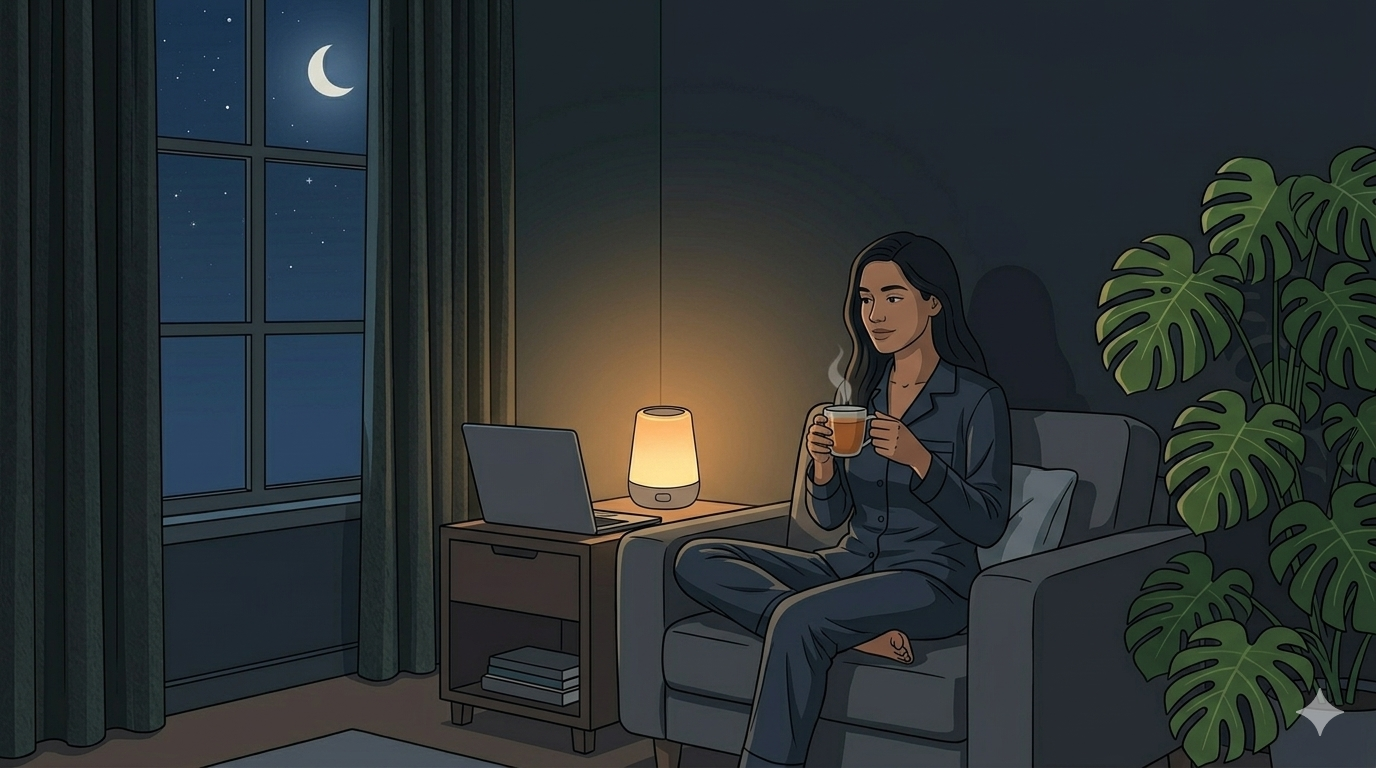
You know the feeling. You’ve had a productive Monday. You’re winding down for the evening, feeling good about your progress. And then, at 6:30 PM, it happens. A notification pings. It’s that client. The one who always finds a problem where there isn’t one. The one who uses passive-aggressive phrasing like “per my last email.” Understanding how work stress and sleep are connected is vital for your health.
Suddenly, your evening is gone. You aren’t “relaxing” anymore; instead, you are mentally drafting a five-paragraph rebuttal. You are replaying the entire history of your interactions with this person. Consequently, you are worrying about the impact on your reputation. You might even worry about your contract or your sanity.
For the remote worker, a difficult client or colleague isn’t just a workplace nuisance. Actually, they are a biological disruptor. Because we work from home, these individuals have a direct line into our most private spaces. Therefore, their stress becomes our stress. Furthermore, their demands become the “ghosts” that haunt our bedrooms. If you don’t have a strategy to neutralize these interactions, you aren’t just losing your evenings. Ultimately, you are losing the restorative sleep you need to handle them tomorrow.
Tonight, we’re going to look at the psychology of workplace conflict. Additionally, we will provide you with a tactical framework for “de-escalating” difficult clients. This allows you to manage work stress and sleep effectively, regardless of what’s in your inbox.
Humans are social animals. Consequently, our brains are hardwired to prioritize social harmony. When we experience a difficult interaction, we feel a professional threat. Specifically, our brain processes it in the “Social Pain Matrix.”
Research using fMRI from Harvard University has shown that the brain processes social rejection and professional conflict in the same areas it processes physical pain. Specifically, these areas are the anterior cingulate cortex and the insula. This is why a nasty email can feel like a “punch in the gut.” This social pain triggers a sustained release of cortisol. Consequently, this keeps your brain in a state of high-arousal. You aren’t overthinking because you’re “sensitive.” Instead, you’re overthinking because your brain thinks you’ve been physically attacked. Therefore, it is trying to figure out how to survive.
The primary way difficult clients destroy sleep is through rumination. Rumination is the act of repetitively thinking about a stressful event. Studies in the journal Sleep have shown that pre-sleep rumination is one of the strongest predictors of long “sleep latency.” Specifically, this is the time it takes to fall asleep.
When you ruminate on a difficult client, you are keeping your “Alertness System” active. Your brain doesn’t know the difference between a real-time argument and a mental rehearsal. Every time you replay that Slack message, you are resetting your biological “sleep timer.” Consequently, you are effectively keeping yourself awake. Therefore, you are “guarding” against a threat that is already in the past. As we discussed in our guide on Work-Life Balance and Sleep, managing this transition is critical for long-term health.
How much is a difficult interaction weighing on your nervous system tonight? Score yourself on a scale of 1-5 for each statement (1 = Never, 5 = Every Day).
Scoring Your Stress:
If you’ve had a difficult interaction, you must physically “wash off” the stress. Specifically, do this before you enter your evening.
Conflict feels intense because it feels personal. However, to neutralize it, you must gain perspective.
If a client is difficult, they must be quarantined.
Remind yourself of your identity outside of work.
You cannot control other people, but you can control your response. This week, your mission is to implement the “Post-Work Decontamination” ritual. Do this on any day you have a difficult client interaction.
Coming Up Next: We’re tackling the logistical stress of global teams with Time Zone Chaos. Specifically, we’ll show you how to manage a 24-hour work cycle.