Physical Address
304 North Cardinal St.
Dorchester Center, MA 02124
Physical Address
304 North Cardinal St.
Dorchester Center, MA 02124
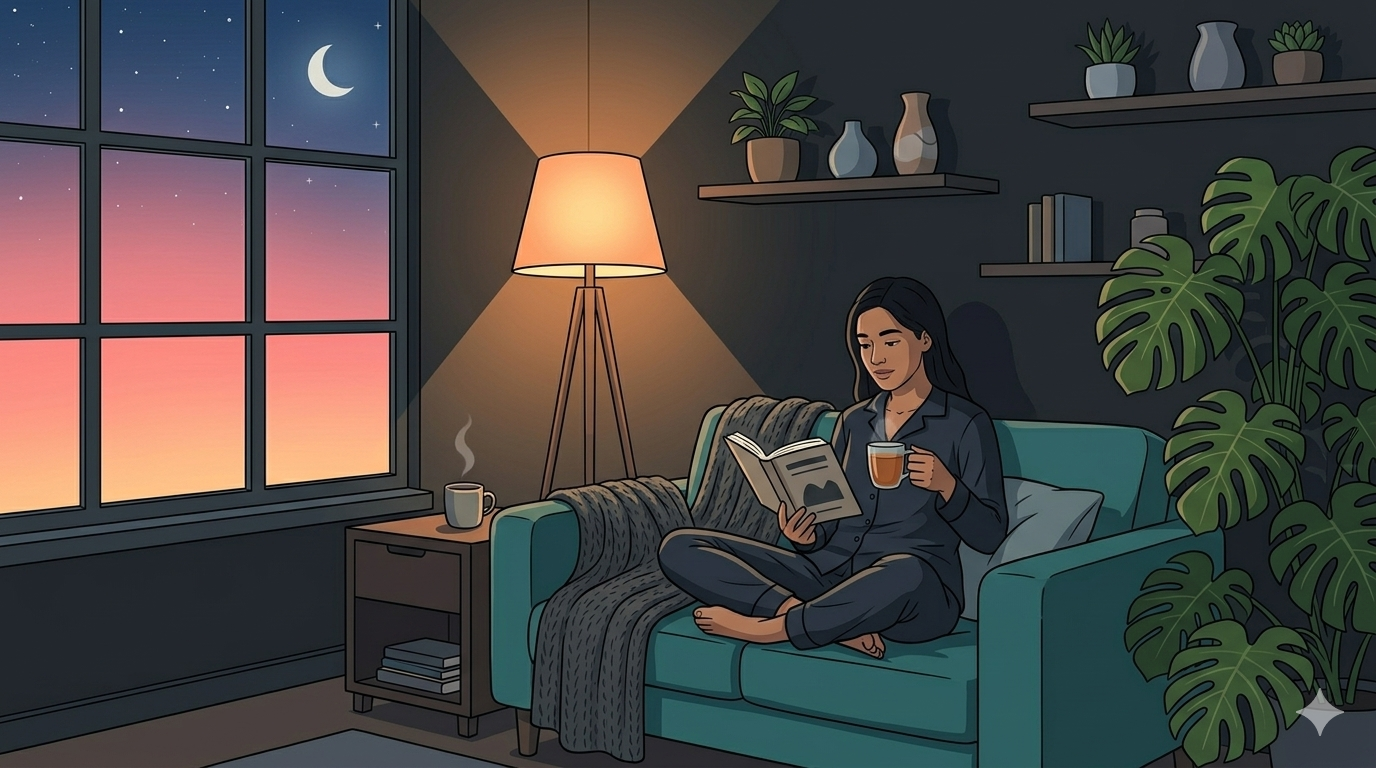
It’s Sunday evening. The sun is beginning to dip below the horizon, and a familiar, cold weight is settling in the pit of your stomach. You’ve had a decent weekend—perhaps you went for a hike, caught up with friends, or finally finished that book. But as the clock ticks toward dinner time, the relaxation evaporates.
Your mind is no longer in the present; it’s already on Monday morning. You’re thinking about the 9:00 AM stand-up, the unread emails that have likely piled up since Friday, and the sheer volume of tasks that await you.
This is the “Sunday Scaries”—a form of anticipatory anxiety that plagues over 80% of workers, but hits remote workers with a unique intensity. In a traditional office, Monday morning starts when you walk through the door. In a home office, Monday morning starts the moment you look at the desk in the corner of your living room. The lack of a physical and temporal boundary means that for many remote workers, Sunday isn’t a day of rest; it’s a day of “pre-work” stress.
Tonight, we’re going to dismantle the Sunday Scaries. We’ll look at the biological reasons why your brain enters “battle mode” before the battle has even begun, and provide a strategy to reclaim your Sunday night sleep.
Anticipatory anxiety is your brain’s way of trying to “prepare” for a future threat. When you think about a stressful work week, your Hypothalamic-Pituitary-Adrenal (HPA) axis—the command center for your stress response—is activated. This results in an increase in cortisol and adrenaline.
The problem is that there is no immediate action to take on a Sunday night. You are in “high alert” mode with nowhere to go. This physiological state is the exact opposite of what is needed for sleep. Your heart rate is slightly elevated, your breathing is shallower, and your core body temperature—which needs to drop for sleep—remains high due to the metabolic cost of stress. You are literally keeping yourself warm for a fight that hasn’t started yet.
Psychologically, the Sunday Scaries are exacerbated by the “Contrast Effect.” This is the jarring transition from the relative freedom and autonomy of the weekend to the structure and demands of the work week. For remote workers, who often struggle with autonomy and “Always-On” expectations, this contrast can feel particularly violent.
Studies in the journal Sleep Medicine have shown that Sunday night sleep is consistently the lowest quality of the week. This isn’t just because of the stress itself, but because the worry about the stress creates a self-fulfilling prophecy of insomnia. You worry about Monday, so you can’t sleep, and then you worry about how tired you’ll be on Monday, which makes it even harder to sleep.
How much is the upcoming work week stealing your Sunday rest? Score yourself on a scale of 1-5 for each statement (1 = Never, 5 = Every Day).
Scoring Your Stress:
The best way to combat anticipatory anxiety is to keep your brain occupied with high-quality, engaging activities that have nothing to do with work.
The Sunday Scaries are often caused by “The Unfinished.” To prevent this, your Sunday recovery must actually start on Friday afternoon.
On Sunday evening, your phone is the most dangerous object in your house. One notification can ruin your entire night.
The Sunday Scaries are built on the narrative that Monday is a threat. To break the cycle, you must change the story.
Breaking the Sunday Scaries is about building a new ritual. This week, your mission is the “Friday Finish” protocol. Write your Monday map before you clock out and see if your Sunday evening feels lighter.
Coming Up Next: We’re moving into Week 2: Mindfulness & Meditation, where we’ll explore how 5-minute routines can transform your sleep quality without requiring an hour on a meditation cushion.