Physical Address
304 North Cardinal St.
Dorchester Center, MA 02124
Physical Address
304 North Cardinal St.
Dorchester Center, MA 02124
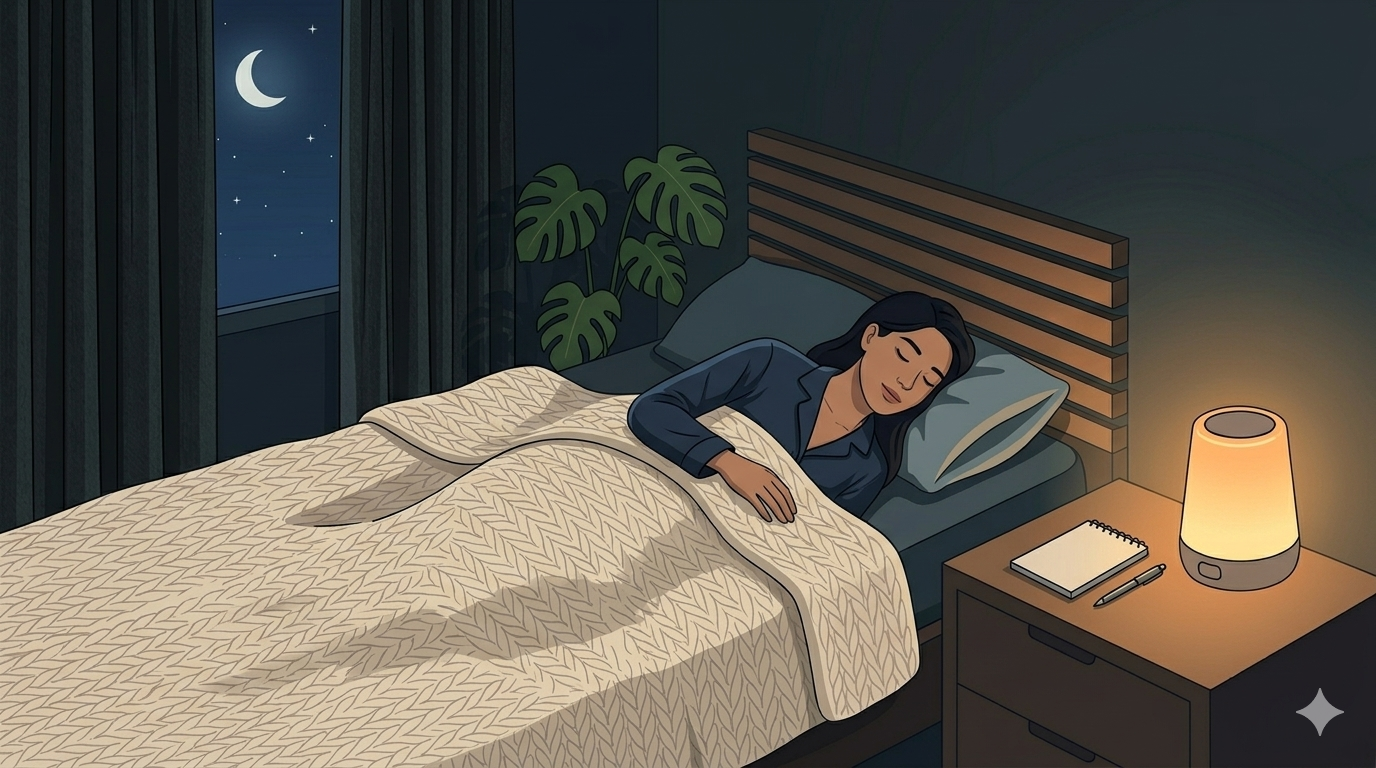
It’s 2:15 AM. The house is silent, save for the hum of the refrigerator. You are lying in bed, staring at the ceiling, and your brain is giving a TED talk. But it’s not an inspiring one. It’s a highlight reel of everything you didn’t finish today, a deep-dive analysis of a slightly awkward comment you made in a Zoom meeting, and a terrifying projection of every possible thing that could go wrong in your presentation tomorrow.
This is “Cognitive Arousal”—the primary enemy of the overthinking remote worker. When your office is your home, the physical walls that used to contain your work-related anxieties have been replaced by the very walls you sleep in. Your bedroom has become a courtroom where you are both the defendant and the prosecutor.
For the modern remote worker, anxiety isn’t always a clinical diagnosis; it’s often a byproduct of the “Always-On” lifestyle. We are constantly processing information, responding to stimuli, and navigating a digital landscape where the finish line is always moving. This chronic state of alertness makes it impossible for the brain to transition into the low-frequency state required for sleep. You aren’t “bad at sleeping”; your brain is just stuck in a high-performance loop that it doesn’t know how to exit.
Tonight, we’re going to explore the mechanics of the racing mind and provide you with a toolkit of science-backed techniques to quiet the midnight monologue and reclaim your rest.
When you are lying in bed overthinking, your brain is experiencing what psychologists call an “Amygdala Hijack.” The amygdala is the part of your brain responsible for the “fight or flight” response. When it perceives a threat—even a digital one like an upcoming deadline—it sends signals to your body to stay alert.
In a healthy sleep cycle, your prefrontal cortex (the rational, “thinking” part of your brain) should be able to calm the amygdala down. However, when you are chronically stressed from a high-pressure remote job, the communication between these two areas breaks down. Your amygdala stays in “alert mode,” and your prefrontal cortex, instead of calming you down, begins to “rationalize” the fear by creating a list of things to worry about. You are literally trapped in a loop of biological alarm and cognitive justification.
When you aren’t focused on a specific task, your brain enters the “Default Mode Network.” For many, this is where creativity happens. But for the overthinker, the DMN becomes a breeding ground for rumination. Dr. Matthew Walker, a leading sleep scientist at UC Berkeley, notes that during the night, our emotional regulation centers are less active, making our worries feel significantly more intense than they do during the day. This is why a minor work issue at 3 PM feels like a career-ending disaster at 3 AM.
How much is your racing mind impacting your rest? Score yourself on a scale of 1-5 for each statement (1 = Never, 5 = Every Day).
Scoring Your Stress:
Anxiety isn’t just in your head; it’s in your body. PMR is a technique that involves systematically tensing and then releasing different muscle groups. This sends a physical signal to your brain that the “threat” is over and it is safe to relax.
If you try to “stop” thinking about work, you will only think about it more (this is known as the “Ironic Process Theory”). Instead, you must give your brain a dedicated time and place to worry.
Your brain is for having ideas, not for holding them. When you are overthinking, it’s often because your brain is trying to “hold on” to a task so you don’t forget it.
This is a rhythmic breathing pattern developed by Dr. Andrew Weil that acts as a “natural tranquilizer” for the nervous system.
Quietening the mind takes practice. This week, your mission is to implement the “Scheduled Worry” technique. Give yourself 15 minutes of “anxiety time” after work and see if it reduces your midnight monologues.
Coming Up Next: We’re tackling the specific dread that hits remote workers on Sunday evening—the Sunday Scaries—and how to sleep soundly before the Monday morning rush.