Physical Address
304 North Cardinal St.
Dorchester Center, MA 02124
Physical Address
304 North Cardinal St.
Dorchester Center, MA 02124
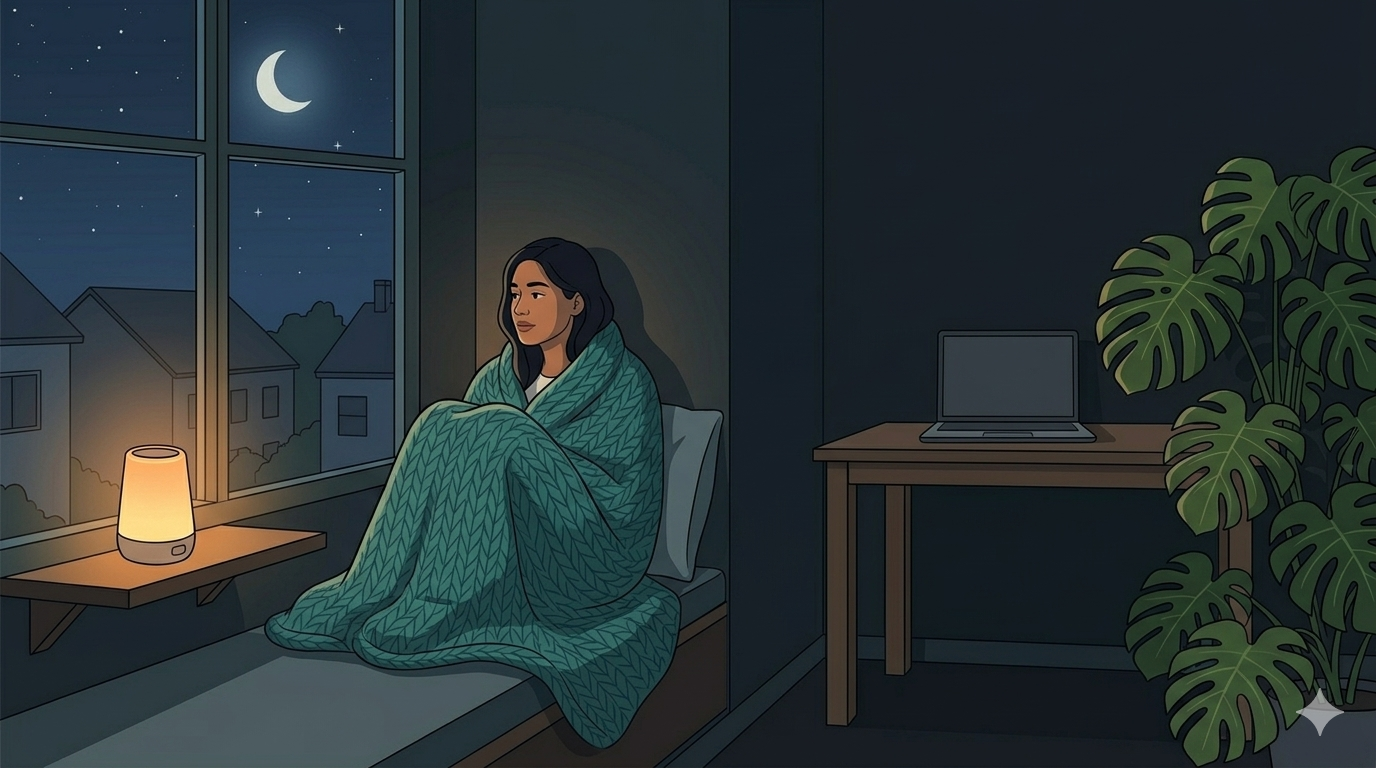
It’s Friday morning. You’ve been awake for two hours. However, you haven’t moved from your bed. You aren’t “sleeping.” Instead, you are just staring at the wall. You feel paralyzed by the thought of opening your laptop. You’ve had your eight hours of rest. Additionally, you didn’t look at a screen before bed. Yet, you feel like you’ve been hit by a freight train. Understanding the link between burnout and sleep is the first step toward recovery.
For the remote worker, burnout is often an “invisible” injury. Specifically, we don’t have the physical cues of an office. We lack the commute and the water cooler chat. Consequently, the stress of our jobs can accumulate like a slow-leak in a basement. Therefore, we don’t notice it until we are standing in deep water. Actually, the first and most critical warning sign is a profound disruption in our sleep quality.
When your body is too tired to function, you aren’t just exhausted. Furthermore, if your mind is too stressed to rest, you are in a state of biological collapse. Tonight, we’re going to look at the clinical intersection of burnout and sleep. Specifically, we’ll help you distinguish between fatigue and true burnout. Additionally, we will provide a roadmap for biological recovery when you’ve finally hit the wall.
Burnout is effectively a state of chronic, unresolved stress. Under normal circumstances, your stress response activates and then returns to baseline. However, in burnout, the HPA axis becomes dysregulated. Consequently, your body loses its ability to manage cortisol effectively.
This leads to the classic “Wired but Tired” phenomenon. Specifically, your cortisol levels might be too low in the morning. Therefore, it feels impossible to get out of bed. Conversely, they might be too high at night. Consequently, it feels impossible to fall asleep. You are biologically “stuck” in a state of high-arousal. Research in the journal Sleep Science has shown that burnout is strongly correlated with non-restorative sleep. As we discussed in our guide on Work-Life Balance and Sleep, managing this transition is critical for long-term health.
Burnout also physically alters your sleep architecture. Specifically, studies have shown that individuals suffering from burnout experience a reduction in deep, slow-wave sleep. Furthermore, they often have fragmented REM sleep.
Without these stages, your brain cannot clear out metabolic waste. Additionally, it cannot process the emotional toll of your work. This creates a feedback loop. Specifically, burnout ruins your sleep, and the lack of sleep accelerates your burnout. Consequently, you lose the cognitive flexibility needed to handle even minor work stressors. Therefore, you enter a rapid downward spiral in both performance and health.
Are you “just tired,” or are you on the verge of collapse? Score yourself on a scale of 1-5 for each statement (1 = Never, 5 = Every Day).
Scoring Your Stress:
When you are burnt out, you must treat rest as a medical requirement.
In burnout, your prefrontal cortex is exhausted. Therefore, you must reduce your cognitive load.
Social media and digital news are sources of “micro-stress.” A burnt-out brain cannot handle them.
Burnout is often driven by an internal narrative of “never doing enough.”
Recovery from burnout takes time. This week, your mission is to implement a “Tech-Free Weekend”. Specifically, avoid all work and social media. See how your energy levels change by Monday.
Coming Up Next: We’re moving into Week 4: Final Polish. Specifically, we’ll explore Creating Mental Boundaries to protect your sanctuary.