Physical Address
304 North Cardinal St.
Dorchester Center, MA 02124
Physical Address
304 North Cardinal St.
Dorchester Center, MA 02124
You finish a grueling ten-hour day in your home office. The laptop lid finally shuts. You feel that familiar tightness in your shoulders and a mental fog that only a day of back-to-back Zoom calls can produce. You wander into the kitchen and reach for the wine bottle. It feels like a reward. You tell yourself it helps you “unwind” and “take the edge off” so you can finally relax. For many remote workers, the evening drink has become the unofficial bridge between the “office” and the “living room.” However, this ritual is quietly sabotaging the very thing you need most: restorative sleep. You might fall asleep faster after a glass or two, but the quality of that sleep is a biological disaster. Consequently, you wake up feeling even more drained the next morning. This cycle is a trap that many of us fall into without realizing the physiological cost. We are trading long-term cognitive health for a momentary sense of calm. Therefore, we need to look closer at what alcohol actually does to our brains while we dream. It is not just about a hangover; it is about the structural integrity of your rest. We must confront the reality that our evening “nightcap” is actually a “night-wrecker.”
When you consume alcohol, you are not actually inviting sleep; you are inviting sedation. Dr. Matthew Walker, a renowned sleep scientist at UC Berkeley, explains that alcohol is a class of drugs called sedatives. Sedation is not sleep. During sedation, the brain’s electrical activity is characterized by high-frequency waves that do not match the deep, slow-wave sleep required for physical repair. When alcohol is present in your system, the brain is forced to process the toxin instead of performing its natural nocturnal duties.
Alcohol is a potent suppressor of REM (Rapid Eye Movement) sleep. This is the stage of sleep where we process emotions, consolidate memories, and maintain our mental health. When you deprive yourself of REM sleep through evening alcohol consumption, you wake up more emotionally reactive and less cognitively sharp. The “rebound effect” that occurs as the alcohol is metabolized often leads to fragmented sleep and early morning awakenings. You might find yourself staring at the ceiling at 3 AM with a racing heart and a dry mouth. This is your nervous system’s reaction to the alcohol leaving your system—a stressful physiological event, not a restful one.
Alcohol causes vasodilation, which brings blood to the surface of your skin. This might make you feel warm and “toasty,” but it actually prevents your core from cooling down efficiently. To fall into a deep sleep, your core body temperature needs to drop by about two to three degrees Fahrenheit. By keeping your core temperature elevated, alcohol traps you in a state of thermal stress throughout the night. Furthermore, alcohol can disrupt your circadian rhythm by interfering with the production of melatonin, the hormone that signals to your body that it is time to sleep.
Before we dive into the solutions, it is important to be honest about where you stand. Rate your experience on a scale of 1 to 5 based on the following statements:
Total Your Score:
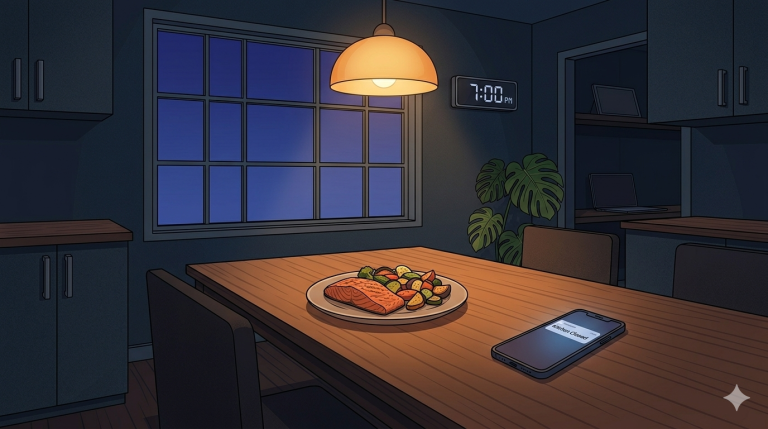
The most impactful change you can make is to increase the “buffer zone” between your last drink and your bedtime. Most experts recommend a minimum of three to four hours. This gives your liver enough time to metabolize the majority of the alcohol before you attempt to sleep. If you plan to go to bed at 10 PM, your last sip should be no later than 6 PM. This might feel early, but your brain will thank you.
If you do choose to have a drink, use the “one-for-one” rule. For every alcoholic beverage, consume at least eight ounces of water. Alcohol is a diuretic, meaning it causes your body to lose fluids. Dehydration is a major contributor to poor sleep quality and the “brain fog” you feel the next day. By staying hydrated, you mitigate some of the physiological stress on your system.
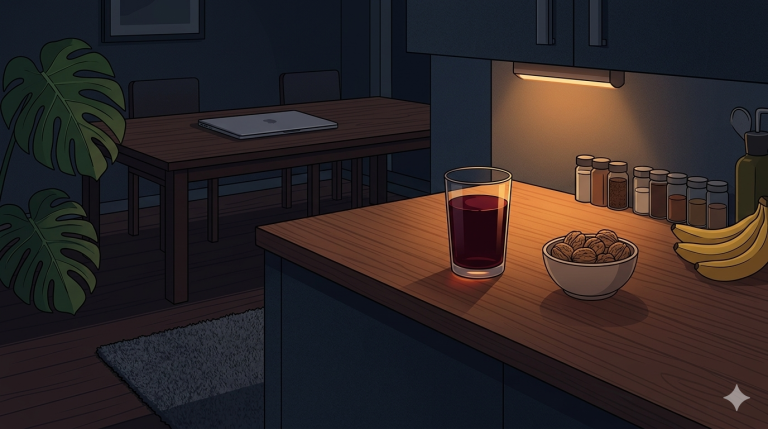
We often reach for a drink because we crave the ritual of relaxation, not just the alcohol itself. Replace your wine glass with a sophisticated “mocktail” or a high-quality herbal tea. Use a nice glass, add some garnishes, and make it feel special. This provides the psychological “off-switch” you need without the biological penalty. Consider options like magnesium-rich drinks, which can actually promote relaxation.
Start tracking your sleep quality on nights you drink versus nights you do not. Use a wearable like the Oura Ring or a simple sleep journal. When you see the hard data—the lower HRV, the higher resting heart rate, and the lack of REM sleep—it becomes much easier to stay motivated. Knowledge is power, and in this case, it is the power to choose better health.
Breaking the evening drink habit is not about deprivation; it is about choosing performance. As a remote worker, your brain is your primary asset. Protecting its ability to recover is the most productive thing you can do. Tomorrow, we will look at how the timing of your meals can further optimize this recovery process. For now, focus on tonight. Choose one of the quick wins above and notice how you feel tomorrow morning.