Physical Address
304 North Cardinal St.
Dorchester Center, MA 02124
Physical Address
304 North Cardinal St.
Dorchester Center, MA 02124
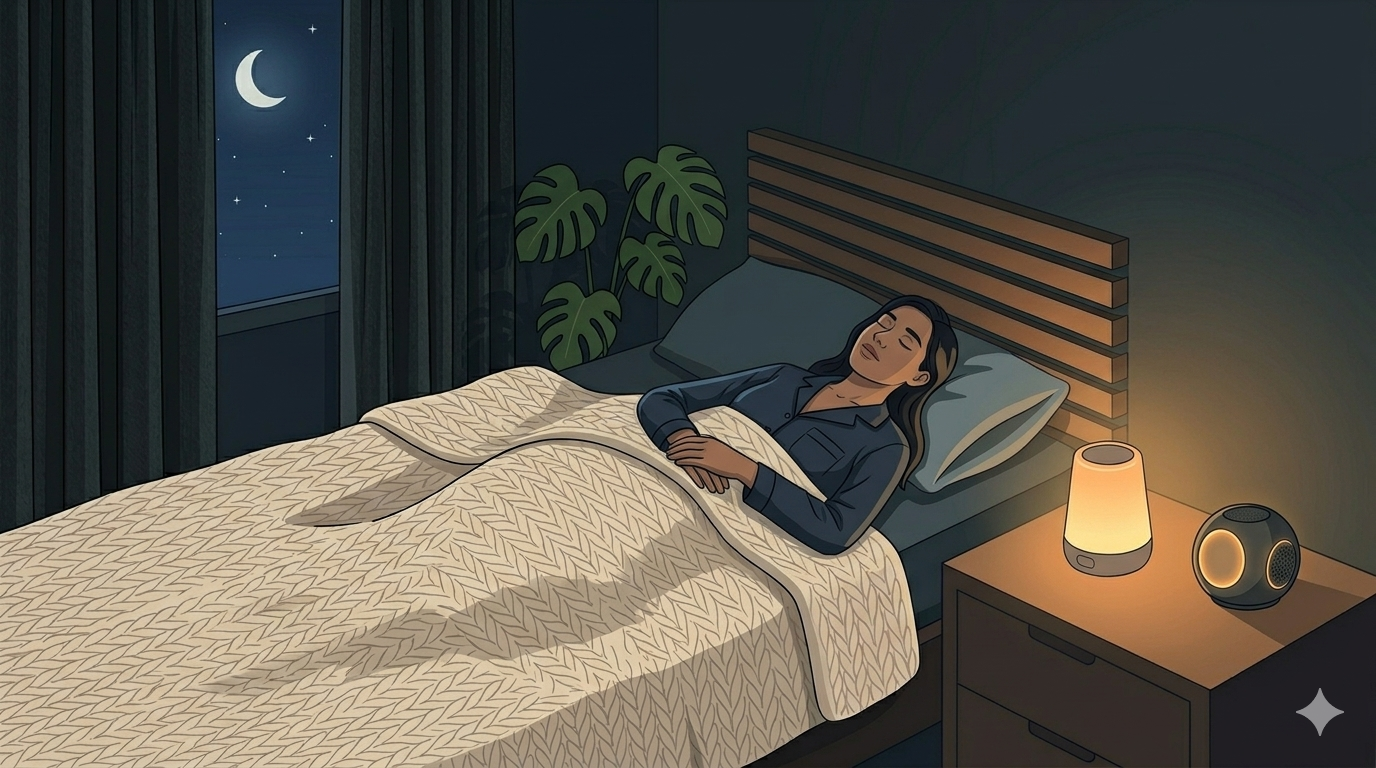
Take a moment right now. Specifically, where are your shoulders? Are they tucked up near your ears? Alternatively, is your jaw clenched? Perhaps your eyebrows are furrowed as you read this. Utilizing Progressive Muscle Relaxation for sleep is the ultimate solution to this chronic physical tension.
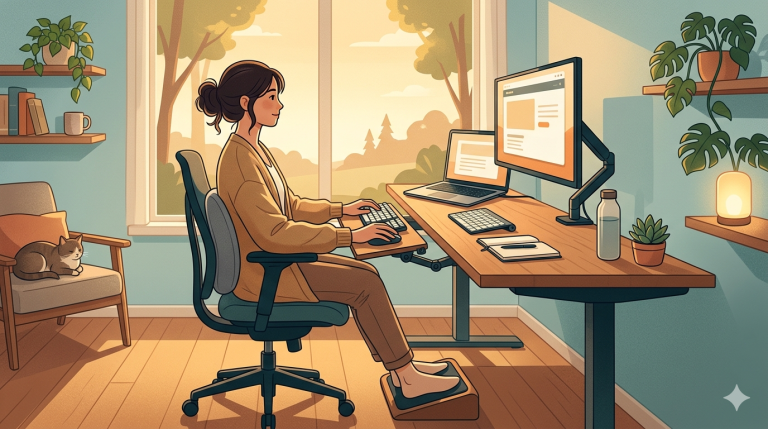
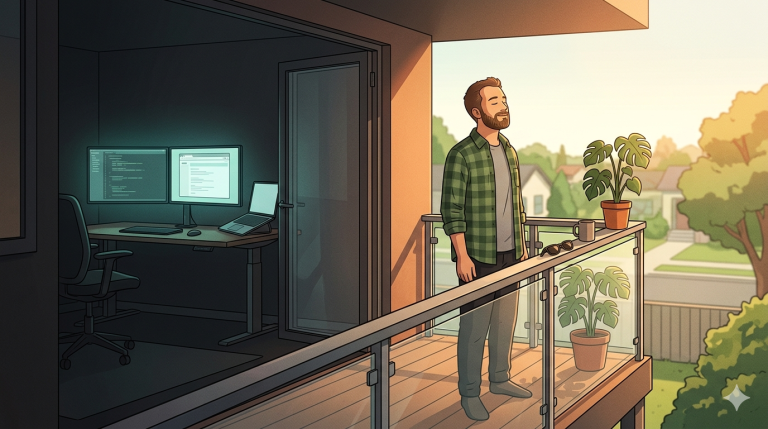
For the modern remote worker, the “desk body” doesn’t just disappear when you close your laptop. Consequently, we spend 8-10 hours a day in a state of static tension, often because we haven’t succeeded in Creating Physical Boundaries between our office and our bedroom. Specifically, our shoulders are rolled forward, our necks are strained, and our core muscles are tight. This isn’t just a posture problem; actually, it’s a sleep problem. Your body is holding onto the “stress armor” of your workday. Therefore, when you lie down in bed, that armor doesn’t just fall off.
This state of chronic physical tension is a signal to your brain. If your muscles are tight, your brain assumes there is a threat. Consequently, it assumes you are still “in the office.” It believes you are still fighting for deadlines and needing to stay alert. Therefore, you can’t enter deep, restorative sleep if your body is still braced for a Slack ping.
Tonight, we’re going to explore Progressive Muscle Relaxation (PMR). This century-old technique is the perfect antidote to the “Desktop Armor.” Additionally, we’ll show you how to systematically release the physical tension of your workday. Ultimately, your body can finally signal to your brain that it’s safe to sleep.
The relationship between your mind and your muscles is a two-way street. While stress causes muscle tension, muscle tension also sustains stress. Consequently, this is known as the “Proprioceptive Loop.” When your muscles are tense, they send a constant stream of information to the amygdala. Therefore, you remain in a state of high arousal.
Progressive Muscle Relaxation, developed by Dr. Edmund Jacobson in the 1920s, works by breaking this loop. Specifically, by deliberately tensing and then suddenly releasing specific muscle groups, you are creating a “vivid contrast.” The sudden release of tension triggers the “Relaxation Response.” This is a physiological state characterized by a drop in blood pressure and heart rate. As we discussed in our guide on Work-Life Balance and Sleep, managing this transition is critical for long-term health.
For many remote workers, the transition from “work” to “life” is purely cognitive. However, we often try to think our way into relaxation. But PMR is a somatic tool—it uses the body to change the mind.
Research published in the Journal of Behavioral Medicine has shown that PMR is one of the most effective non-pharmacological treatments for insomnia. Specifically, it is highly effective for those whose sleep is disrupted by anxiety. By physically “unclenching” your body, you are manually flipping the switch on your Parasympathetic Nervous System. Consequently, this makes it biologically easier to drift off.
How much work-related tension are you carrying tonight? Score yourself on a scale of 1-5 for each statement (1 = Never, 5 = Every Day).
Scoring Your Stress:
To be effective, PMR must be systematic. We recommend starting from your feet and working your way up.
While you are tensing and releasing, your mind must be fully present in the sensation.
If you find it difficult to stay focused on the protocol, use a guided audio session.
The release phase of PMR should always be accompanied by a long, slow exhale.
Physical relaxation is the foundation of mental quiet. This week, your mission is to perform the “Toe-to-Head Protocol” every night for 5 nights. Additionally, pay close attention to how your jaw and shoulders feel when you wake up.
Coming Up Next: We’re moving into Week 3: Workplace Dynamics. Specifically, we’ll tackle one of the biggest sleep-disruptors: Dealing with Difficult Clients.