Physical Address
304 North Cardinal St.
Dorchester Center, MA 02124
Physical Address
304 North Cardinal St.
Dorchester Center, MA 02124
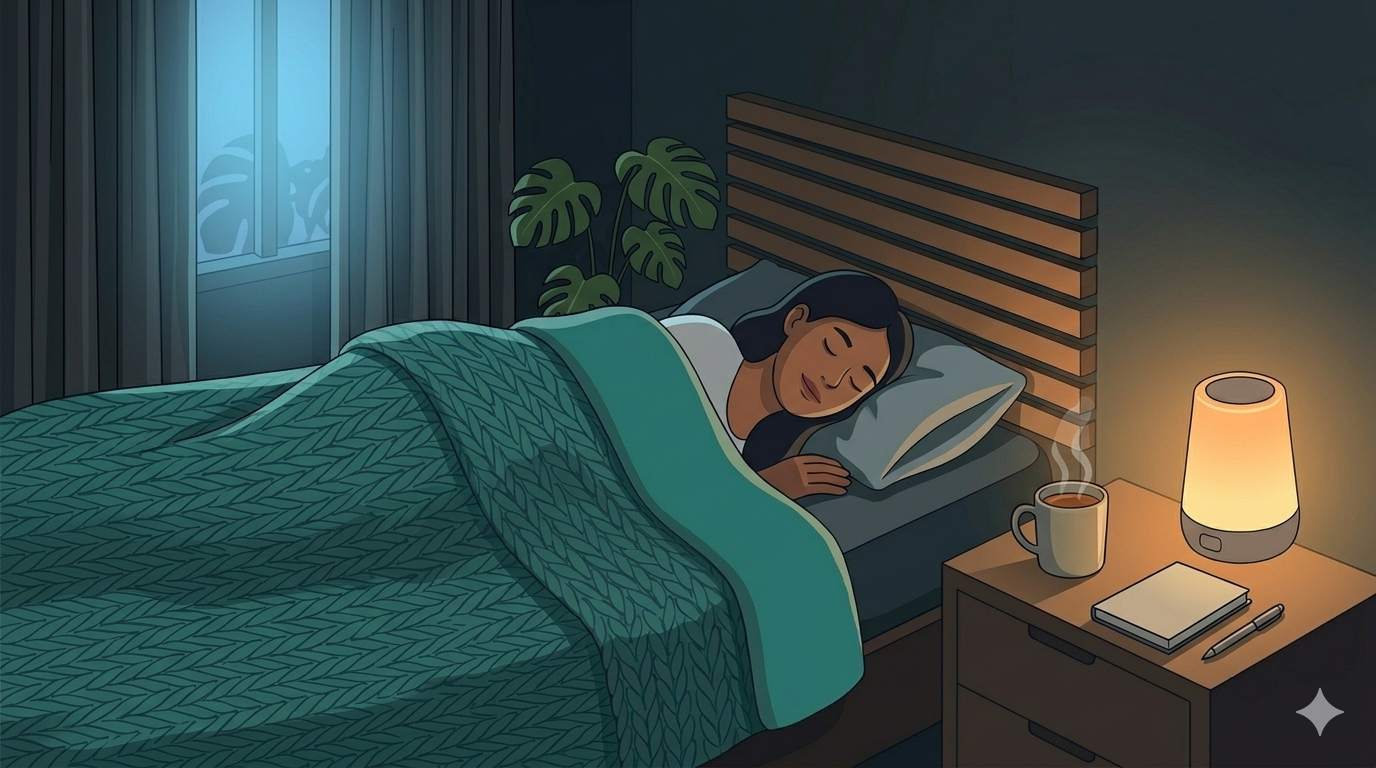
We’ve all been there. You finally shut down your laptop, crawl into bed, and just as you’re about to drift off, your brain decides it’s the perfect time to solve that complex coding bug. You might remember that you forgot to reply to your boss. Alternatively, you might draft the perfect witty retort to a Slack thread from three hours ago. Utilizing journaling for sleep is the most effective way to prevent these nighttime interruptions.
This isn’t a coincidence. When you’re “on” all day in a remote work environment, your brain is in a state of constant input. Consequently, it’s only when the house goes quiet and the lights go out that your mind finally has the space to process the day’s events. Without a deliberate exit strategy, your brain will use your sleep time to do its “filing.” Therefore, this is what we call the Cognitive Logjam: a backlog of unprocessed work stress, unfinished tasks, and emotional residue that blocks your path to deep sleep.
For the remote worker, the solution isn’t to try and “not think.” Instead, the solution is to think on paper. Journaling isn’t just for poets and teenagers; actually, it is a high-performance tool for cognitive offloading. Specifically, it is the act of moving data from your short-term “working memory” to a permanent external storage device (the page). This allows your brain to finally go “offline.”
Tonight, we’re going to explore the science of the “Brain Dump.” Additionally, we will provide you with a structured journaling protocol. This is designed to clear your mental cache and prepare you for a night of restorative rest.
As we’ve mentioned in previous articles, including our deep dive into the Sunday Scaries, the Zeigarnik Effect is the psychological phenomenon where our brains remain “looped” on uncompleted tasks. In a remote work setting, where work is never truly “finished,” this loop can become a source of chronic insomnia.
Research published in the Journal of Experimental Psychology found that individuals who took five minutes to write a “to-do” list for the next day fell asleep significantly faster than those who wrote about completed tasks. By writing down the “unfinished” business, you are signaling to your brain that the information is safe. Therefore, the brain doesn’t need to stay “active” during the night. Consequently, you are essentially closing the open tabs in your mental browser.
Journaling also serves a critical emotional function. When you work from home, you lack the “debrief” that often happens during a commute or a casual chat with a colleague. Instead, you carry the frustrations of a difficult meeting or a demanding client directly into your evening.
Writing about stressful events has been shown to reduce activity in the amygdala—the brain’s emotional alarm system. Specifically, Dr. James Pennebaker, a pioneer in expressive writing research at the University of Texas, has shown that translating “feelings” into “words” helps the brain organize and integrate the experience. Consequently, this reduces the emotional “noise” that often keeps remote workers in a state of high-alert long after they’ve clocked out. As we discussed in our guide on Work-Life Balance and Sleep, managing this transition is critical for long-term health.
How heavy is your mental “backlog” tonight? Score yourself on a scale of 1-5 for each statement (1 = Never, 5 = Every Day).
Scoring Your Stress:
In a world of digital tools, your sleep journal must be physical.
This is a tactical exercise to satisfy the Zeigarnik Effect. It is not about “journaling your feelings”; instead, it’s about clearing your to-do list.
If you find yourself ruminating on digital interactions (Slack threads, emails), use the journal to “close” those threads.
Ending your night on a positive note is the best way to down-regulate your nervous system.
Journaling is the manual “save” button for your day. This week, your mission is to implement the “5-Minute Brain Dump” for three consecutive nights. Observe if it reduces the “loudness” of your thoughts in bed.
Coming Up Next: We’re moving into physical recovery with Progressive Muscle Relaxation. Specifically, we’ll show you how to physically “unclench” your body from a day at the desk.