Physical Address
304 North Cardinal St.
Dorchester Center, MA 02124
Physical Address
304 North Cardinal St.
Dorchester Center, MA 02124
One of the greatest perks of working from home is also its greatest sleep hazard: the pantry is only ten feet away from your desk. When you’re grinding through a difficult project or finally hang up after a particularly draining client call, that bag of cookies or bowl of sugary cereal feels like the ultimate, well-deserved reward. It’s a quick hit of dopamine that seems to soothe the stress of the digital office, but it’s a temporary fix with a heavy nighttime tax.
The problem with these high-sugar “reward snacks” is the inevitable physiological aftermath. That 9 PM sugar rush leads to a 3 AM insulin spike and a subsequent cortisol surge. You wake up in the dead of night, heart racing and mind spinning, wondering why you can’t stay asleep. What felt like a comfort in the moment has become a biological alarm clock, shattering your sleep architecture and leaving you exhausted for tomorrow’s meetings.
Snacking for sleep isn’t about ignoring your hunger; it’s about choosing functional fuel that supports your recovery rather than sabotaging it. By understanding the chemistry of “sleepy snacks,” you can satisfy your cravings while actually deepening your rest. Let’s explore how to turn your midnight munchies into a strategic advantage for your performance.
If tryptophan is the “builder” of sleep, magnesium is the “relaxer.” This mineral plays a crucial role in over 300 biochemical reactions in the body, including the regulation of GABA, a neurotransmitter that reduces neuronal excitability. Many remote workers are chronically deficient in magnesium due to high stress and a diet of processed “desk snacks.” Low magnesium levels are often linked to insomnia, restless legs, and high levels of anxiety. Therefore, incorporating magnesium-rich snacks into your evening can significantly improve your ability to drift off. Foods like almonds, pumpkin seeds, and dark chocolate (in moderation) are excellent sources. Furthermore, magnesium helps lower cortisol levels, the hormone that keeps you alert and stressed. By calming the central nervous system, magnesium prepares your body for the physical stillness required for deep, slow-wave sleep. It is the closest thing nature has to a “mute button” for your daily stress.
While your brain produces melatonin naturally in response to darkness, you can also consume it directly from certain foods. Tart cherries, walnuts, and goji berries are among the few natural sources of dietary melatonin. Studies have shown that consuming tart cherry juice can significantly increase melatonin levels and improve sleep duration and quality. This is a powerful tool for the remote worker who may be struggling with blue light exposure from screens late into the day. By adding these specific foods to your evening routine, you are reinforcing the signal to your brain that it is time to wind down. This is a much safer and more sustainable approach than relying on high-dose synthetic melatonin supplements. If you have already integrated the foundational principles from our guide on The Remote Worker’s Sleep Diet, these targeted snacks will act as the “final polish” on your recovery protocol.
Before you reach for that bag of chips, take a moment to diagnose your late-night hunger. Rate your typical evening snacking habits on a scale of 1 to 5:
Most of us fall into the 1-3 range, driven by habit and stress rather than genuine physiological need. The goal is to move toward level 5 by replacing those “junk” cravings with high-quality, science-backed alternatives.
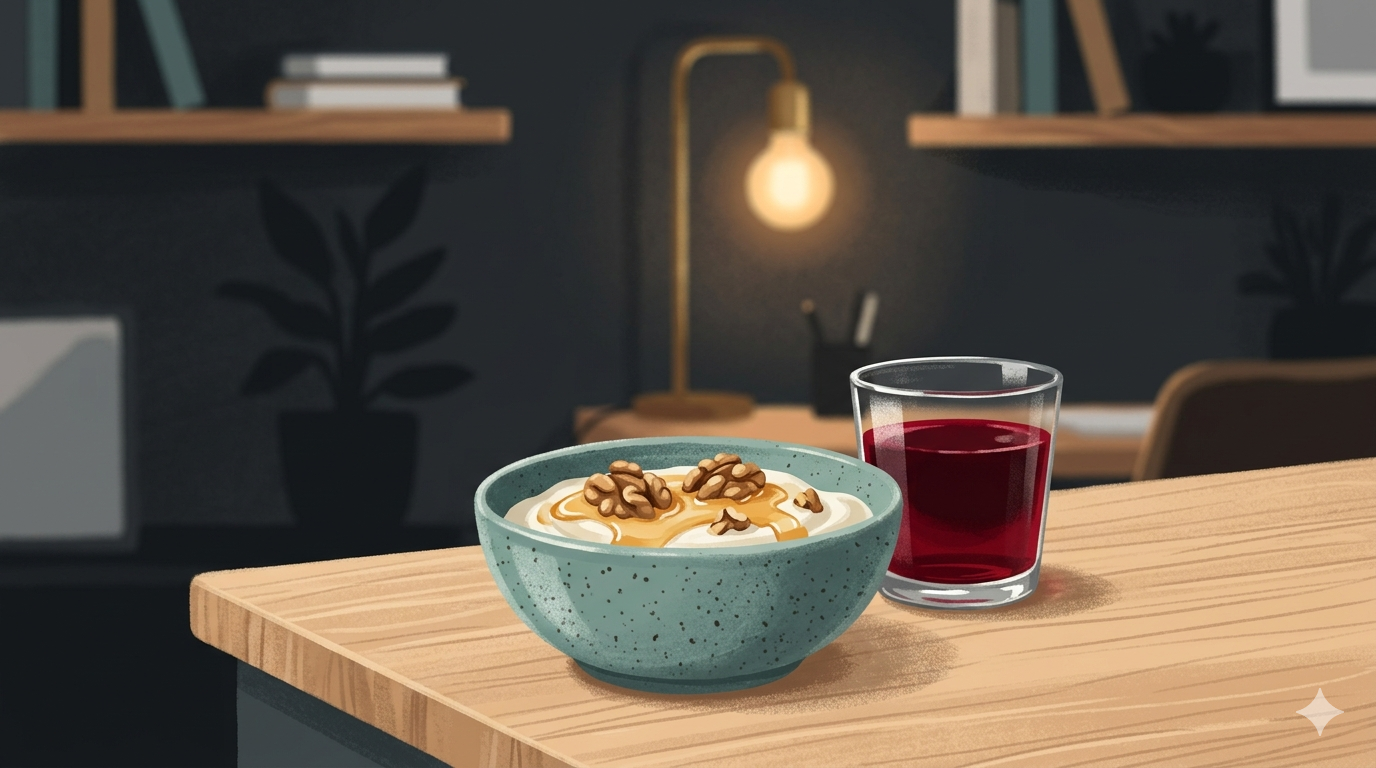
The golden rule of sleep-supportive snacking is the “Balanced Pair.” This means combining a protein or healthy fat with a small amount of complex carbohydrate. This combination stabilizes your blood sugar and ensures a steady release of sleep-inducing amino acids. For example, a small bowl of Greek yogurt with a few walnuts, or a piece of whole-grain toast with almond butter. This prevents the “insulin spike and crash” that can lead to middle-of-the-night awakenings. It also provides a sense of satiety that keeps you from going back for seconds. Think of it as a “slow-release” fuel for your nocturnal repair systems.
If you are looking for a powerful, liquid alternative to heavy snacks, the “Tart Cherry Protocol” is your best friend. Consuming 4-8 ounces of unsweetened tart cherry juice about 90 minutes before bed can provide a concentrated dose of melatonin and anti-inflammatory antioxidants. For many people, this ritual replaces the desire for a sugary dessert or a glass of wine. It is a “functional ritual” that serves a biological purpose. You can even mix it with a bit of sparkling water for a refreshing, sleep-inducing “mocktail.” This simple change can have a measurable impact on your sleep data within just a few nights.
Even the healthiest snack can disrupt sleep if you eat too much of it or too close to bedtime. The goal is to keep your evening snack under 200 calories and to consume it at least 60-90 minutes before your head hits the pillow. This allows for basic digestion to occur so that your body’s energy can be redirected to repair once you fall asleep. Avoid “heavy” proteins like red meat or large amounts of fiber-rich beans, as these require significant digestive effort. Instead, stick to “pre-digested” or easily broken-down options like yogurt, nut butters, or soft fruits.
Often, what we perceive as hunger is actually mild dehydration. Before you prepare a snack, drink a full glass of room-temperature water or a cup of caffeine-free herbal tea like chamomile or valerian root. Wait ten minutes. If you are still genuinely hungry, then proceed with your sleep-supportive snack. This simple “hydration buffer” can prevent hundreds of unnecessary calories and reduce the metabolic load on your body. Additionally, staying hydrated helps your body maintain the proper temperature regulation required for deep sleep. It is a double win for your recovery.
As a remote worker, you have the unique advantage of total control over your environment. Use that power to curate a kitchen that supports your performance. By choosing sleep-supportive snacks, you are making a conscious investment in your mental clarity for tomorrow. You are telling your body that its recovery is a priority. Tomorrow, we transition into Week 3, where we will discuss how to move your body during the day to ensure it is ready to rest at night. For now, enjoy your healthy snack, sip your tea, and get ready for a night of deep, undisturbed sleep. You have earned it.