Physical Address
304 North Cardinal St.
Dorchester Center, MA 02124
Physical Address
304 North Cardinal St.
Dorchester Center, MA 02124
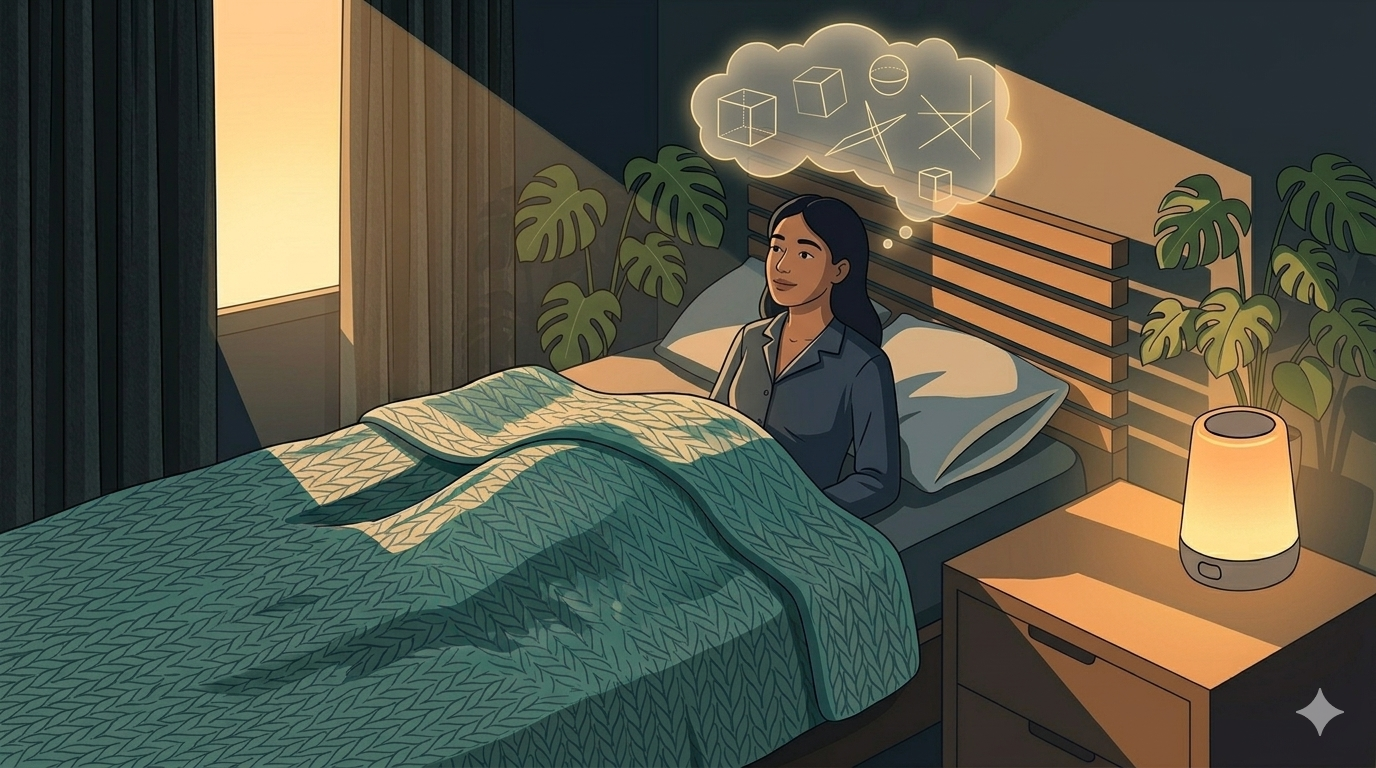
You’ve spent eight hours staring at the same problem. You’ve had three meetings about it. Furthermore, you’ve looked at the data from every possible angle. And yet, the solution remains out of reach. You close your laptop, feeling frustrated. But then, at 4:00 AM, you wake up with a jolt. The answer is suddenly obvious. You didn’t “work” for it; instead, it just appeared. Understanding the link between sleep and creativity is the key to unlocking these moments.
This is the power of sleep-driven creativity. Specifically, for the remote worker, our value isn’t measured in hours at a desk. Instead, it is measured in the quality of our ideas. We are “knowledge workers.” Therefore, our brain is our primary tool. However, we often treat our brains like machines. We view sleep as a loss of time. Actually, sleep is when the real work happens.
In reality, sleep is the phase where your brain integrates data. Without quality rest, you aren’t just tired. Consequently, you are cognitively rigid. Therefore, you lose the ability to see patterns. Eventually, you become a “maintenance worker” of your own career. Tonight, we’re going to explore the link between sleep and creativity. Specifically, we’ll look at REM sleep and problem-solving. Additionally, we’ll show you how to optimize your rest for professional innovation.
Sleep is divided into distinct stages. However, for creativity, REM sleep is king. During REM, your brain’s neurochemistry changes. Specifically, norepinephrine levels drop. Conversely, acetylcholine levels rise. This facilitates learning and memory.
This creates a “biological sandbox.” Specifically, your brain can play with information without logic constraints. Dr. Matthew Walker, author of Why We Sleep, describes REM as a “creative incubator.” During this phase, your brain strengthens connections between unrelated data. Consequently, the “Aha!” moment is born. Therefore, if you cut sleep short, you are cutting off innovation. As we discussed in our guide on Work-Life Balance and Sleep, managing this transition is critical for long-term health.
While REM sleep handles creativity “software,” deep sleep handles the “hardware.” Specifically, during deep sleep, your glymphatic system is active. It flushes out metabolic debris like beta-amyloid.
A “clogged” brain cannot be creative. Consequently, when you are sleep-deprived, your prefrontal cortex suffers first. Therefore, you become prone to “linear thinking.” Innovation requires a “clean” brain. Specifically, you need a brain that can move in non-linear directions. This is the biological foundation of sleep and creativity.
How much is your lack of sleep stifling your professional potential? Score yourself on a scale of 1-5 for each statement (1 = Never, 5 = Every Day).
Scoring Your Stress:
To maximize REM sleep, you must protect the last two hours of your night.
You can “task” your brain to work for you while you sleep.
When you wake up with a creative flash, you must capture it immediately.
Stop feeling guilty for resting.
Creativity is a biological byproduct of quality rest. This week, your mission is to implement the “Incubation Technique”. Additionally, see what your brain delivers at 7:00 AM.
Coming Up Next: We’re moving into Month 5: Nutrition & Lifestyle. Specifically, we’ll explore how your “Sleep Diet” can fuel recovery.