Physical Address
304 North Cardinal St.
Dorchester Center, MA 02124
Physical Address
304 North Cardinal St.
Dorchester Center, MA 02124
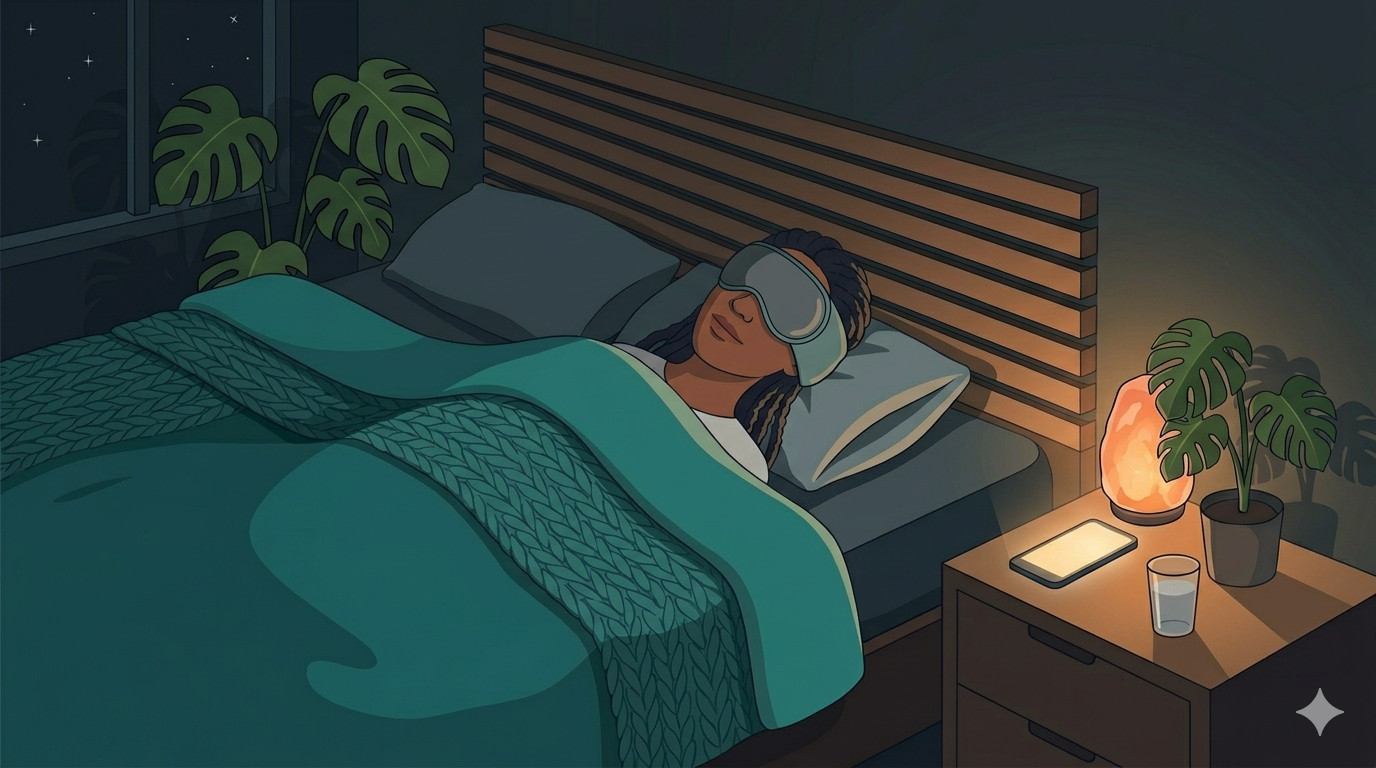
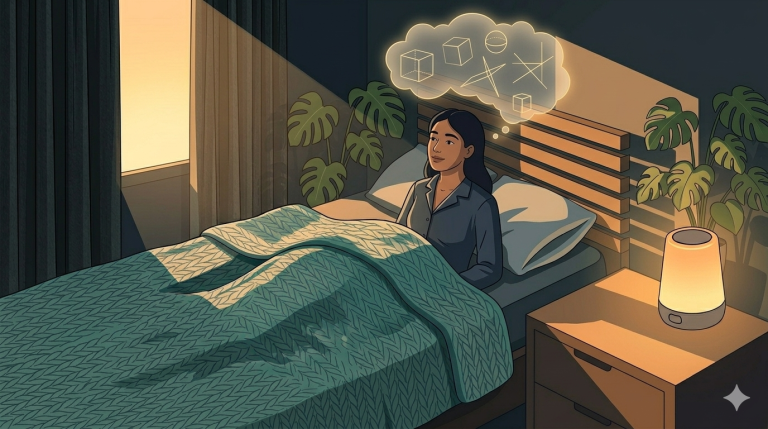
It is 11:45 PM. You have been “off the clock” for four hours, but your brain didn’t get the memo. You’ve closed the laptop, dimmed the lights, and even performed the mandatory “Digital Sunset.” Yet, the moment your head hits the pillow, the silence in your bedroom feels deafeningly loud.
Instead of the gentle drift into N1 sleep, you’re treated to a high-definition, surround-sound replay of your 2:00 PM Zoom call. You’re mentally drafting an email response to a client who hasn’t even messaged you yet. You’re calculating the ROI of a project that doesn’t launch for three weeks. You are staring at the ceiling, and your heart rate is climbing because you know that every minute spent awake is a minute of cognitive performance stolen from tomorrow.
For the remote worker, this isn’t just “stress”—it’s Context Collapse.
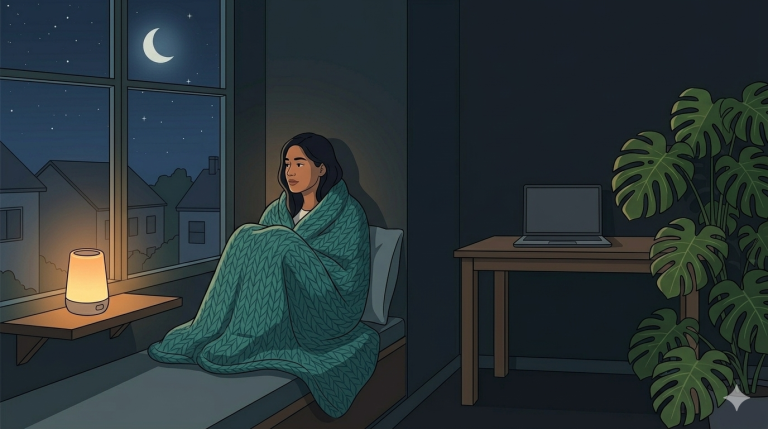
When your office and your sanctuary occupy the same physical square footage, the psychological boundaries that once signaled “safe for sleep” have eroded. Your brain is stuck in a loop of hyperarousal, scanning for work-related threats in a room that is supposed to be for recovery. You aren’t “lazy” or “bad at sleeping”; you are simply suffering from a neurological mismatch. Your environment is telling your brain “Office,” while your clock is telling it “Bed.”
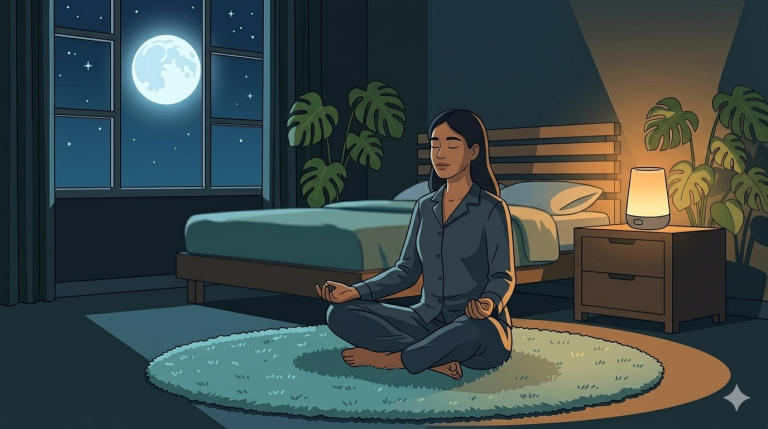
If this sounds familiar, you don’t need “more discipline.” You need to leverage the neurobiology of sound to manually flip the switch from Beta work-mode to Delta sleep-mode. In this guide, we’re going deep into the science of auditory sleep aids and how to build a sensory “off-switch” that works even when your work-brain won’t shut up.
To understand why a 45-minute story about a fictional bakery helps you sleep, we have to look at how the brain processes auditory stimuli during the transition to rest. As neuroscientist Dr. Matthew Walker (author of Why We Sleep) explains, the brain’s ability to “power down” is contingent on its perception of safety and the absence of high-stakes cognitive tasks.
Neuroscience suggests that the primary barrier to sleep for high-performers is “Pre-sleep Arousal.” When you are at your desk, your brain is in a state of Beta wave activity—logical, analytical, and fast. To sleep, you must downshift into Alpha (relaxed) and eventually Theta (light sleep).
Auditory sleep aids, specifically narrative stories and meditation apps, perform what psychologists call “Cognitive Offloading.” By giving the brain a low-stakes, non-stimulating focal point, you interrupt the Default Mode Network (DMN). This is the part of the brain responsible for rumination. When you listen to a story, the DMN is “crowded out,” preventing it from cycling through work tasks. You aren’t ignoring your stress; you are simply giving your brain a different, easier job to do.
Consistent, rhythmic soundscapes—such as pink noise or a low-frequency human voice—trigger the release of GABA (gamma-aminobutyric acid). GABA is your nervous system’s primary inhibitory neurotransmitter; it acts as the “brakes” for your brain.
Research indicates that rhythmic auditory stimulation can reduce cortisol levels (the “stress hormone”) by up to 60% in high-stress individuals. By mimicking the steady cadence of a resting heartbeat or a calm breath, these apps signal to your amygdala that the environment is secure. This signals the body to begin its nocturnal decline in temperature and heart rate, the two primary physical requirements for deep sleep.
Why does a story work better than silence? It’s called Narrative Transport. When you become absorbed in a story that has no “stakes” (no plot twists, no danger, no complex puzzles), your brain enters a state of flow. This “boring but interesting” sweet spot occupies the logical centers of the brain just enough to keep them from wandering back to your Trello board, but not enough to keep them awake.
This is essentially a “Trojan Horse” for sleep. Your brain thinks it is following a story, but because the story is repetitive and low-energy, the brain eventually “gives up” on tracking the details, allowing the natural buildup of Adenosine (sleep pressure) to take over.
Not all audio aids are created equal. Use this 1-5 diagnostic to determine which tool you need tonight based on your specific remote-work stressor.
Question: When you close your eyes, what is “racing” the most?
Diagnostic Results:
The goal of a sleep podcast isn’t to entertain you; it’s to occupy you just enough that you don’t think your own thoughts.
Most people know “White Noise,” but for remote workers with high-frequency anxiety, it can often feel too “sharp” or “hissy.”
For those who prefer a structured approach, meditation apps provide specialized content for the “Always-On” worker.
Your audio strategy is only as good as the hardware delivering it.
If you’re starting tonight, implement these four tactical adjustments:
Audio is the final bridge to sleep, but the foundation is built by the environment you inhabit during the day. If your bedroom feels like an annex of your office, no amount of Matthew McConaughey can save your sleep.
Tonight’s Challenge: Download one episode of Nothing Much Happens and set your phone to “Do Not Disturb” at 9:00 PM. Notice if the “silence” feels a little less like an enemy and a little more like a tool.
Coming Up Next: DIY Sleep Environment Optimization: Budget-Friendly Solutions for the Home Office Sanctuary. (Scheduled for March 25th)