Physical Address
304 North Cardinal St.
Dorchester Center, MA 02124
Physical Address
304 North Cardinal St.
Dorchester Center, MA 02124
You’ve conquered the basics. Your bedroom is a temple of sleep optimization—blackout curtains, perfect temperature, no screens before bed. Your sleep tracker shows you’re getting your 7-8 hours, and you’ve built a solid bedtime routine. But what if I told you there’s a whole other level of sleep optimization that could take your rest from “pretty good” to “absolutely transformative”?
Welcome to the world of sleep biohacking—the practice of using science-backed strategies to intentionally optimize your biology for peak performance. This isn’t about quick fixes or trendy wellness fads. It’s about understanding how your body’s systems work and then making strategic interventions to enhance your natural sleep processes.
For remote workers, sleep biohacking represents a unique opportunity. You already have more control over your environment and schedule than most people—why not leverage that flexibility to create the optimal conditions for restorative sleep? The goal isn’t just to sleep better, but to unlock a level of energy, focus, and resilience that gives you a real competitive advantage in your remote work.
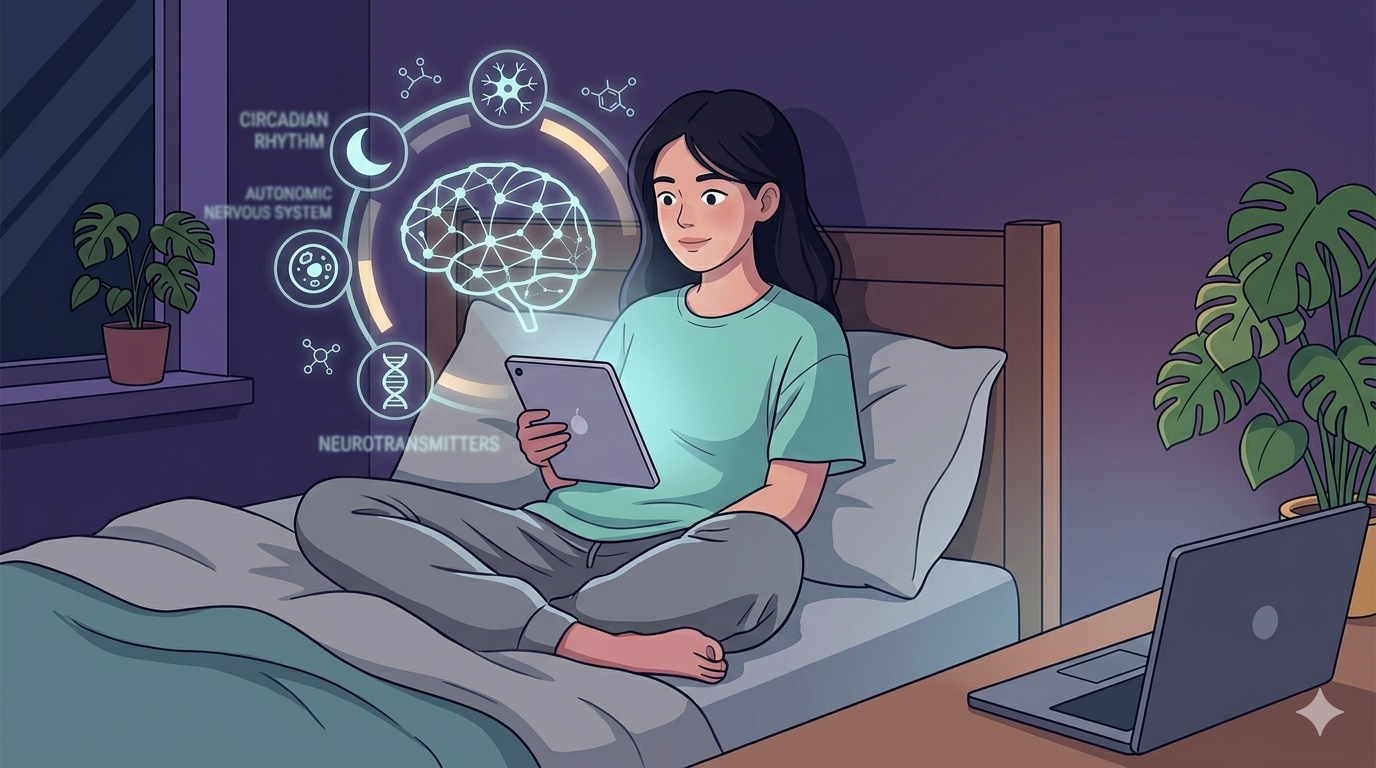
Before diving into specific strategies, let’s understand what we’re actually trying to optimize. Sleep biohacking focuses on four key areas:
Your Circadian Rhythm: Your Internal GPS Your circadian rhythm is like your body’s internal clock, governing when you feel alert and when you feel sleepy. For remote workers, this system often gets confused by irregular schedules, artificial light exposure, and the lack of natural environmental cues that come with spending most of your time indoors.
Your Autonomic Nervous System: The On/Off Switch Your autonomic nervous system has two main modes: sympathetic (fight-or-flight) and parasympathetic (rest-and-digest). Modern remote work can keep us stuck in sympathetic mode—constantly responding to notifications, dealing with deadlines, and managing the stress of self-directed work. Sleep biohacking helps shift you into parasympathetic mode when it’s time to rest.
Cellular Recovery and Detoxification: Your Body’s Maintenance Mode Sleep is when your body does its most important repair work—clearing metabolic waste from your brain, consolidating memories, and restoring cellular function. The quality of this recovery process directly impacts how you’ll feel and perform the next day.
Neurotransmitter Balance: Your Brain’s Chemical Messengers Sleep involves a complex dance of neurotransmitters—chemicals that help your brain transition between wake and sleep states. Factors like stress, diet, light exposure, and lifestyle choices can throw this balance off, leading to difficulty falling asleep, staying asleep, or achieving deep, restorative sleep phases.
Now, let’s explore some cutting-edge approaches that can take your sleep to the next level:
Strategic Light Optimization: Beyond Blue Light Blocking
You probably already know about blue light blocking glasses, but let’s take light management to the next level:
Red Light Therapy for Evening Relaxation Red and near-infrared light therapy is gaining attention in the biohacking community for good reason. Unlike blue light, red light doesn’t suppress melatonin production and may actually support cellular function and relaxation.
The strategy: Use a red light therapy device for 10-20 minutes in the evening, about 1-2 hours before bedtime. Many people find this helps them transition from “work mode” to “rest mode,” especially if they’ve been staring at screens all day.
For remote workers, this can be particularly valuable because it creates a clear ritual that signals the end of the workday. Consider the Joovv Mini Red Light Therapy Device for a professional-grade option, or try more budget-friendly red light therapy bulbs that you can use in any lamp.
Morning Light Amplification While evening red light helps you wind down, morning bright light exposure is crucial for setting your circadian rhythm. This is especially important for remote workers who might not get outside much during the day.
The strategy: Get bright light exposure (ideally natural sunlight) within 30 minutes of waking up. If natural light isn’t available, consider a 10,000 lux light therapy lamp for 15-30 minutes during your morning routine.
Targeted Supplementation: Precision Nutrition for Sleep
Beyond basic magnesium supplements, advanced sleep biohacking involves more targeted approaches:
L-Theanine for Relaxed Alertness L-theanine is an amino acid found in green tea that promotes relaxation without drowsiness. It’s particularly useful for remote workers who struggle with an overactive mind at bedtime.
The strategy: Take 100-200mg of L-theanine about an hour before bed. It can help reduce the mental chatter that often keeps remote workers awake—you know, that endless loop of tomorrow’s tasks and project concerns.
Look for high-quality, third-party tested L-Theanine supplements to ensure purity and potency.
Apigenin for Natural Sedation Apigenin is a flavonoid found in chamomile that has mild sedative effects. It’s becoming popular in biohacking circles as a natural alternative to stronger sleep aids.
The strategy: Start with 50mg about 30 minutes before bed. This works particularly well when combined with other relaxation practices.
Glycine for Temperature Regulation Glycine is an amino acid that can help lower your core body temperature, which is a crucial signal for sleep onset. This is especially relevant for remote workers who might be dealing with temperature fluctuations in their home office setup.
The strategy: Take 1-3 grams of glycine powder (it’s sweet and dissolves easily in water) about an hour before bed.
Important note: Always consult with a healthcare provider before starting any new supplement regimen, especially if you’re taking other medications or have health conditions.
Cold Exposure: Shocking Your System into Rest
This might sound counterintuitive, but strategic cold exposure can actually improve your sleep quality:
Evening Cold Therapy Cold exposure 1-2 hours before bed can trigger several beneficial responses: it activates your parasympathetic nervous system, lowers your core body temperature, and can help clear your mind of the day’s stressors.
The strategy: Try a cold shower for 30 seconds to 2 minutes, or even just splashing cold water on your face and wrists. You don’t need to torture yourself—even moderately cool water can be effective.
For remote workers, this can be an excellent way to create a clear boundary between work time and rest time. It’s like hitting a reset button on your nervous system.
If you want to take this further, consider a cold plunge tub or even just a large ice bath that you can set up in your backyard or bathroom.
Grounding and Earthing: Reconnecting with Natural Rhythms
This is one of the more “woo-woo” sounding biohacks, but there’s actually some interesting science behind it:
Outdoor Grounding Grounding involves direct skin contact with the earth’s surface—think walking barefoot on grass, dirt, or sand. Some research suggests this can help balance your body’s electrical charge and reduce inflammation.
The strategy: Spend 10-20 minutes barefoot outdoors in the late afternoon or early evening. This combines the benefits of grounding with natural light exposure and fresh air.
For remote workers who spend most of their time indoors, this can be a powerful way to reconnect with natural rhythms and reduce the “tech overload” that can interfere with sleep.
Indoor Grounding Options If outdoor grounding isn’t practical, consider an earthing mat for your workspace or bedroom. While outdoor grounding is preferable, these products can provide a convenient alternative.
Advanced Breathwork: Hacking Your Nervous System
Breathwork is one of the most powerful and accessible biohacking tools for sleep optimization:
The 4-7-8 Technique This breathing pattern can quickly shift your nervous system into parasympathetic mode:
Box Breathing for Busy Minds Particularly useful for remote workers with racing thoughts:
Vagal Nerve Stimulation The vagus nerve is a key player in your parasympathetic nervous system. Simple techniques like gargling vigorously for 30 seconds or doing gentle neck stretches can help activate it.
For guided breathwork, apps like Calm or Headspace offer excellent programs designed specifically for sleep preparation.
Temperature Biohacking: Creating the Perfect Sleep Environment
Your body temperature naturally drops as you prepare for sleep, and you can enhance this process:
Cooling Mattress Technology Consider investing in a cooling mattress pad or smart mattress system that can automatically adjust temperature throughout the night.
Hot Bath Strategy A hot bath or shower 1-2 hours before bed can actually help you sleep better. When you get out, your body temperature drops rapidly, mimicking the natural temperature decline that promotes sleep.
Room Temperature Optimization Keep your bedroom between 60-67°F (15-19°C). This might feel cool during the day, but it’s optimal for sleep. Consider a smart thermostat that can automatically adjust temperature based on your sleep schedule.
Here’s how to approach sleep biohacking systematically:
Start with One Strategy at a Time Don’t try to implement everything at once. Choose one biohack that resonates with you and commit to it for 2-3 weeks before adding anything else.
Track Your Progress Use your sleep tracker to monitor changes in sleep quality, HRV, resting heart rate, and sleep stages. Keep a simple journal noting how you feel each morning.
Be Patient and Consistent Biohacking isn’t about quick fixes—it’s about consistent, strategic interventions that compound over time. Give each strategy at least 2-3 weeks to show effects.
Listen to Your Body Not every biohack works for everyone. Pay attention to how you feel, not just what your devices tell you. If something doesn’t feel right, don’t force it.
Consider Professional Guidance If you’re dealing with serious sleep issues or have health conditions, consider working with a healthcare provider who understands sleep optimization.
The most important aspect of sleep biohacking isn’t any specific technique—it’s adopting a mindset of continuous optimization and self-experimentation. You’re not just trying to fix sleep problems; you’re actively working to enhance your body’s natural recovery processes.
For remote workers, this mindset can be particularly powerful because you already have more control over your environment and schedule than most people. You can experiment with different strategies, track what works, and create a personalized sleep optimization system that fits your unique lifestyle and needs.
Remember, the goal isn’t to become obsessed with perfection or to turn sleep into another stressful project. It’s about making strategic improvements that help you feel more energized, focused, and resilient in your remote work life.
Quality sleep is one of the most powerful tools you have for optimizing your performance and well-being. By applying these advanced biohacking strategies, you’re not just improving your nights—you’re investing in your ability to thrive in your remote work career.
Start with one strategy that appeals to you, stay consistent, and prepare to discover what truly restorative sleep can do for your life and work.