Physical Address
304 North Cardinal St.
Dorchester Center, MA 02124
Physical Address
304 North Cardinal St.
Dorchester Center, MA 02124
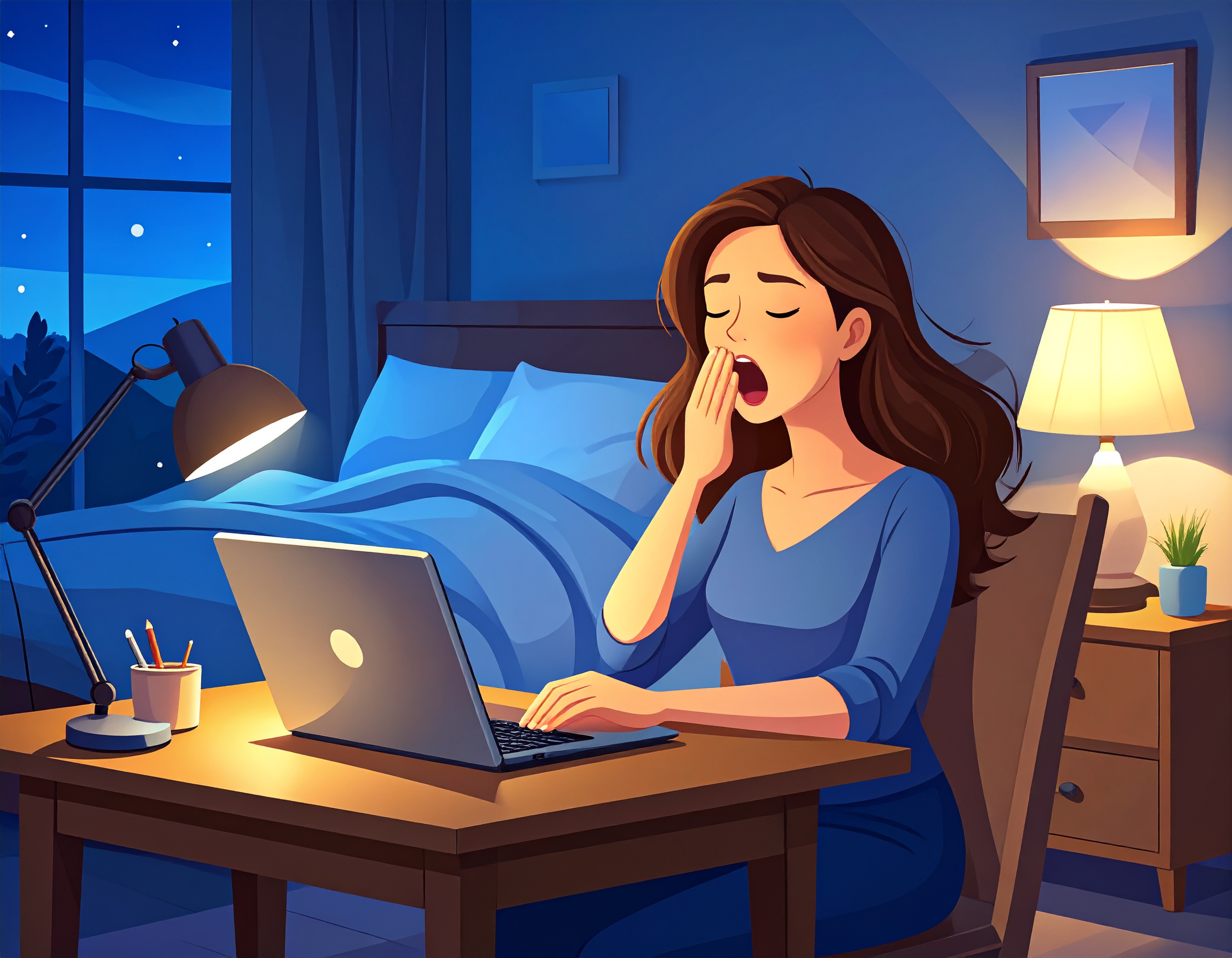
If you’re reading this at 2 AM after another restless night of tossing and turning, you’re not alone. A recent study by the Sleep Foundation found that 67% of remote workers report worse sleep quality since working from home. But here’s what’s shocking: it’s not just about stress or screen time. Your entire home office setup is systematically destroying your sleep architecture.
As someone who’s spent the last five years researching sleep optimization specifically for remote workers, I’ve discovered that the traditional sleep advice doesn’t work for us. Why? Because we face unique challenges that office workers never encounter.
When your bedroom is 20 feet from your laptop, your brain never learns to separate “work mode” from “sleep mode.” Neuroscientist Dr. Matthew Walker explains that our brains create location-based associations. Your bedroom should trigger sleepiness, but when you answer emails from bed or work late in your bedroom, you’re literally training your brain to be alert in your sleep space.
The Science: Your brain releases cortisol (stress hormone) and suppresses melatonin (sleep hormone) when it associates your bedroom with work. This creates a chronic state of sleep readiness disruption.
Remote workers typically spend 2-3 more hours per day exposed to blue light compared to office workers. But it’s not just screen time – it’s the timing and intensity. Most remote workers work past sunset without adjusting their lighting, effectively telling their circadian rhythm it’s still noon at 9 PM.
The Data: Research from Harvard Medical School shows that blue light exposure after 6 PM can delay sleep onset by up to 3 hours and reduce deep sleep by 23%.
Working alone triggers what researchers call “social circadian disruption.” Humans evolved to sync our sleep-wake cycles with others. When you work in isolation, your body loses important timing cues, leading to irregular sleep patterns even when you try to maintain a schedule.
Office workers have a commute – a mental transition period between work and home. Remote workers go from Zoom calls to dinner prep in seconds. This lack of decompression time keeps your nervous system in “fight or flight” mode, making quality sleep nearly impossible.
Rate each statement from 1-5 (1 = never, 5 = always):
Score:
Create absolute physical separation between work and sleep spaces. If you live in a studio apartment, use a room divider, different lighting, or even just a specific chair that’s only for work.
Establish hard start and stop times for work. Use a “shutdown ritual” – a specific sequence of actions that signals to your brain that work is over.
Implement circadian lighting in your home office. Use bright, blue-rich light during work hours and warm, dim lighting after sunset.
Develop active stress management techniques designed for remote workers, including specific breathing exercises and movement practices.
This post is just the beginning. Over the next few weeks, we’ll dive deep into each aspect of remote worker sleep optimization:
The remote work revolution isn’t going anywhere, but that doesn’t mean your sleep has to suffer. With the right strategies, remote workers can actually achieve better sleep quality than traditional office workers – but only if we address the unique challenges we face.
Take Action: Start with one boundary today. Choose either a physical boundary (dedicated work space) or temporal boundary (hard stop time) and implement it this week.