Physical Address
304 North Cardinal St.
Dorchester Center, MA 02124
Physical Address
304 North Cardinal St.
Dorchester Center, MA 02124
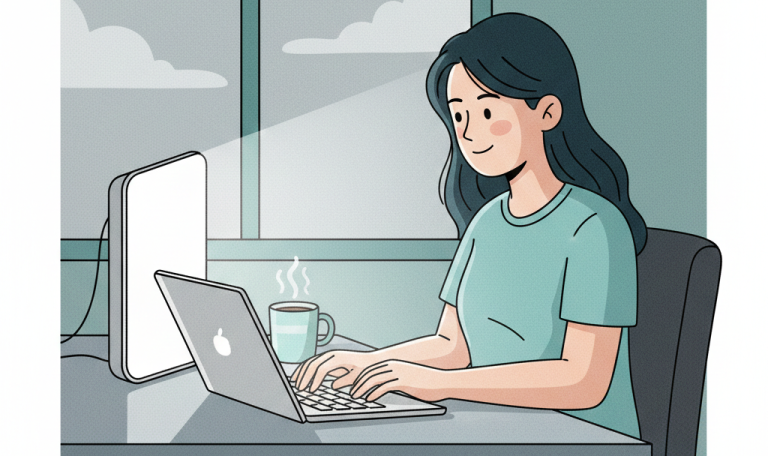
For remote workers, the biggest challenge isn’t always falling asleep, but winding down. When your office is just steps away, the mental “off switch” can be elusive. You finish a demanding day, walk a few feet, and suddenly you’re expected to be relaxed and ready for sleep. Your brain, still buzzing from spreadsheets and Zoom calls, needs a clear signal that the workday is truly over.
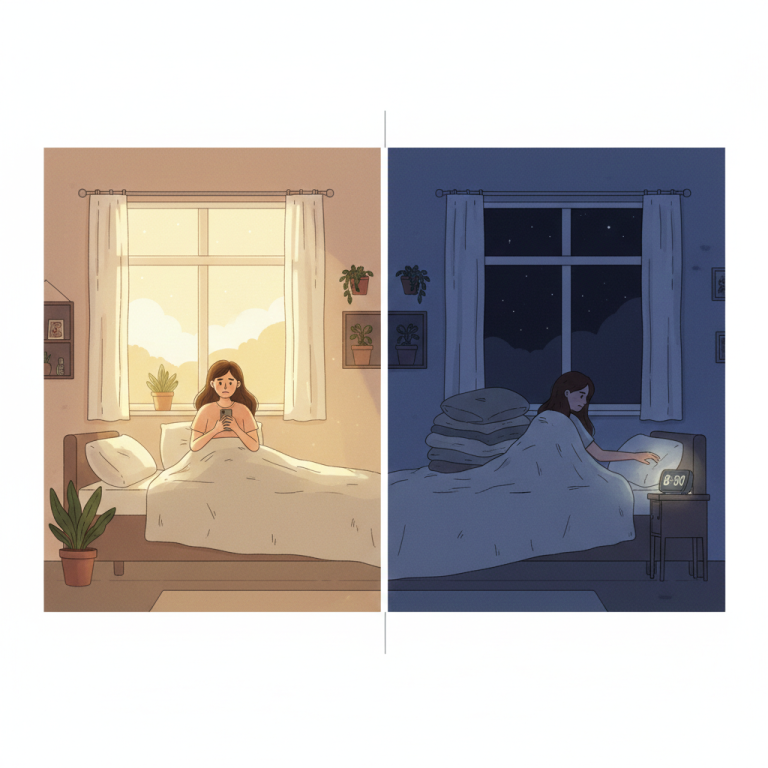
I’ve seen countless remote workers struggle with this transition. They’ll tell me they feel exhausted but can’t quiet their minds. They’ll lie in bed mentally rehearsing tomorrow’s presentation or replaying a difficult client conversation. The physical distance between work and sleep might be short, but the mental distance feels impossible to bridge.
Enter the 3-2-1 Sleep Rule. It’s a deceptively simple yet incredibly powerful evening routine designed to create essential boundaries between your work life and your sleep life. I’ve seen it transform the sleep of countless remote professionals, turning chaotic evenings into peaceful transitions and restless nights into restorative sleep.
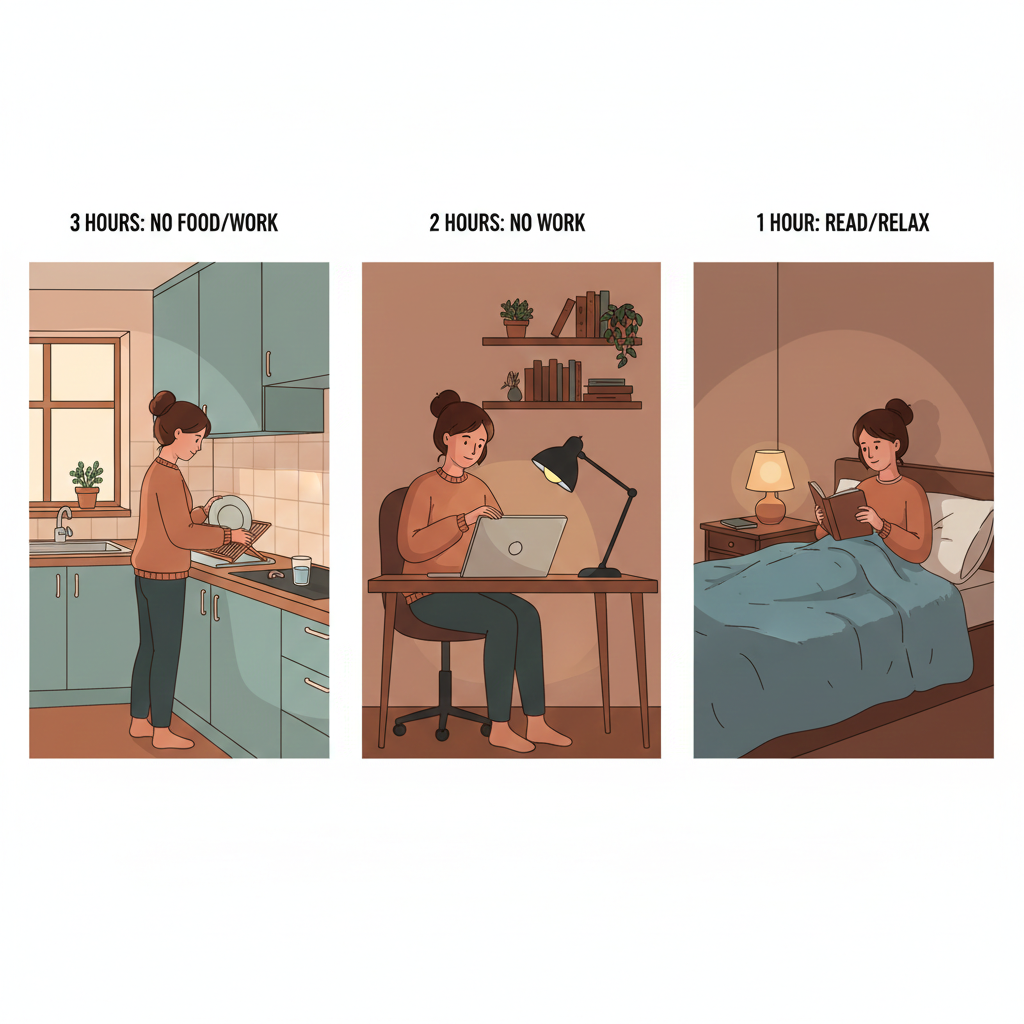
The 3-2-1 Rule is a guideline for timing specific activities before bed:
This isn’t just a random collection of restrictions. Each element is strategically designed to address specific physiological and psychological processes that can interfere with sleep. When you follow this rule consistently, you’re essentially creating a step-down approach to sleep preparation, giving your body and mind time to transition from the demands of the day to the rest of the night.
Before diving into implementation, let’s understand why this simple framework is so effective. Your body operates on multiple internal clocks and systems that need to align for optimal sleep. The 3-2-1 Rule addresses three critical systems:
When these systems are out of sync, sleep becomes elusive. The 3-2-1 Rule helps synchronize them, creating the optimal conditions for natural, restorative sleep.
1. 3 Hours Before Bed: No More Food or Alcohol (Digestive Rest)
The Remote Worker Angle: Late-night snacking or a glass of wine after a stressful workday can feel like a reward, especially when you’re working from home and the kitchen is always accessible. However, your body expends significant energy digesting food and processing alcohol, raising your core body temperature and interfering with natural sleep processes.
The Deeper Science: When you eat close to bedtime, your body diverts energy and blood flow to your digestive system. This can raise your core body temperature by 1-2 degrees, which is significant when you consider that your body needs to cool down by 2-3 degrees to initiate sleep. Alcohol might make you feel sleepy initially, but it fragments your sleep architecture, particularly REM sleep, and can cause early morning awakenings as your body processes the alcohol.
The Metabolic Impact: Late eating can also disrupt your metabolic rhythm. Your body expects to fast during sleep, and eating late can interfere with this natural process, potentially affecting blood sugar regulation and hormone production during the night.
Advanced Strategies:
2. 2 Hours Before Bed: No More Work (Mental Decompression)
The Remote Worker Angle: This is arguably the most crucial rule for remote workers. Without a physical commute, the “mental commute” often gets skipped. Your brain needs time to transition from problem-solving mode to relaxation mode. The temptation to check “just one more email” or finish “one small task” can keep your stress hormones elevated well into the night.
The Neurological Reality: When you’re working, your brain is in a state of focused attention, with elevated levels of cortisol and adrenaline. These hormones are designed to keep you alert and focused, but they take time to clear from your system. Research shows that it can take 2-3 hours for stress hormones to return to baseline levels after stopping work activities.
The Cognitive Load Factor: Remote workers often carry a heavier cognitive load than office workers because they’re managing both work tasks and home environment simultaneously. This mental juggling act can make it even harder to “turn off” work thoughts.
Advanced Wind-Down Strategies:
3. 1 Hour Before Bed: No More Screens (Light & Cognitive Wind-Down)
The Remote Worker Angle: After staring at screens all day for work, it’s easy to transition straight to personal screens (phone, TV, tablet). The blue light emitted by these devices suppresses melatonin production, but the impact goes beyond just light exposure. The engaging content keeps your mind active and stimulated, making it harder to achieve the mental quiet needed for sleep.
The Complex Screen Impact: Screens affect sleep in multiple ways:
The Dopamine Factor: Screens, particularly social media and streaming services, are designed to trigger dopamine release. This reward system activation can make it harder to wind down and can create a cycle where you keep reaching for “just one more” video, post, or episode.
Advanced Screen Alternatives:
Tool Recommendations:
Phase 1: Preparation (Days 1-3)
Phase 2: Implementation (Days 4-7)
Phase 3: Optimization (Week 2)
Phase 4: Integration (Week 3-4)
**Challenge 1: “I Don’t Have Time for a 3-Hour Wind-Down”**Solution: Start with a 2-1-0.5 rule (2 hours no food/alcohol, 1 hour no work, 30 minutes no screens) and gradually extend the timeframes as you see benefits.
**Challenge 2: “My Work Requires Evening Availability”**Solution: Negotiate specific times when you’re available for true emergencies. Set up separate communication channels for urgent vs. non-urgent matters.
**Challenge 3: “I Get Bored Without Screens”**Solution: This is often withdrawal from dopamine stimulation. Start with audio content or engaging books, then gradually try more meditative activities.
**Challenge 4: “My Family Doesn’t Understand”**Solution: Explain the benefits you’re experiencing and invite them to try elements of the routine. Consider making it a family activity.
Track these metrics to see how the 3-2-1 Rule is working:
Sleep Quality Indicators:
Lifestyle Indicators:
The 3-2-1 Sleep Rule provides a powerful, simple framework for remote workers to regain control over their evenings and their sleep. It’s not about restriction—it’s about creating the space and conditions your body and mind need to transition from work to rest naturally and effectively.
Remember, the goal isn’t perfection. If you miss a night or need to adjust the timing occasionally, that’s normal. The key is consistency and finding the rhythm that works for your unique situation. As you implement this rule, you’ll likely find that your evenings become more peaceful, your sleep more restorative, and your days more energized and productive.