Introduction
You’ve set up your home office, implemented digital boundaries, and mastered your evening routine. Yet, if you’re still tossing and turning, the culprit might be something you can’t see but definitely feel: your bedroom temperature. For remote workers, who might be less active or spend more time in climate-controlled environments, optimizing sleep temperature is a crucial, often overlooked, step to achieving truly restorative sleep.
I’ve worked with remote professionals who tried everything—blackout curtains, white noise machines, expensive mattresses—only to discover that their bedroom was simply too warm for optimal sleep. The transformation that happens when you get temperature right is often immediate and dramatic. Clients report falling asleep faster, staying asleep longer, and waking up more refreshed.
Our bodies are exquisitely designed to cool down for sleep. Even a few degrees off the ideal can significantly impact your ability to fall asleep, stay asleep, and achieve the deep, restorative stages of sleep that are essential for peak performance. As a sleep optimization specialist, I’ve seen that dialing in the right temperature is a non-negotiable for remote workers who want to maintain high energy and focus during their workday.
The Science of Sleep Temperature (Deep Dive)
Your body’s relationship with temperature and sleep is more complex than most people realize. Your core body temperature naturally fluctuates throughout the day in a predictable pattern called your circadian temperature rhythm. Understanding this rhythm is key to optimizing your sleep environment.
The Daily Temperature Cycle:
- Morning: Your core temperature begins to rise, signaling wakefulness
- Afternoon: Temperature peaks, supporting alertness and energy
- Evening: Temperature begins to drop, triggering drowsiness
- Night: Temperature reaches its lowest point during deep sleep
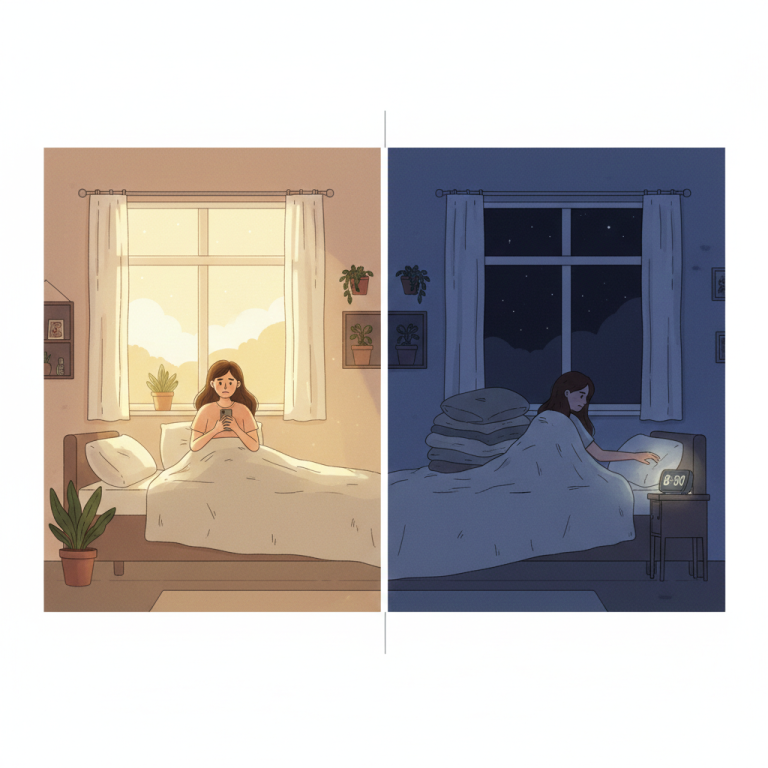
The Sleep Initiation Process: Your body’s core temperature naturally dips as you approach sleep and continues to fall into the deepest stages. This drop of 1-2 degrees Fahrenheit is a key signal to your brain that it’s time for rest. When your bedroom is too warm, your body has to work harder to achieve this cooling, which can:
- Delay sleep onset by 15-30 minutes or more
- Reduce time spent in deep sleep stages
- Increase the number of times you wake up during the night
- Make you feel less refreshed in the morning
The Thermoregulation Challenge: Your body uses several mechanisms to regulate temperature during sleep:
- Vasodilation: Blood vessels in your extremities dilate to release heat
- Sweating: Your body’s primary cooling mechanism
- Behavioral responses: Unconsciously removing blankets or changing positions
When your bedroom is too warm, these mechanisms work overtime, creating micro-awakenings that fragment your sleep even if you don’t fully wake up.
The Ideal Sleep Temperature Range
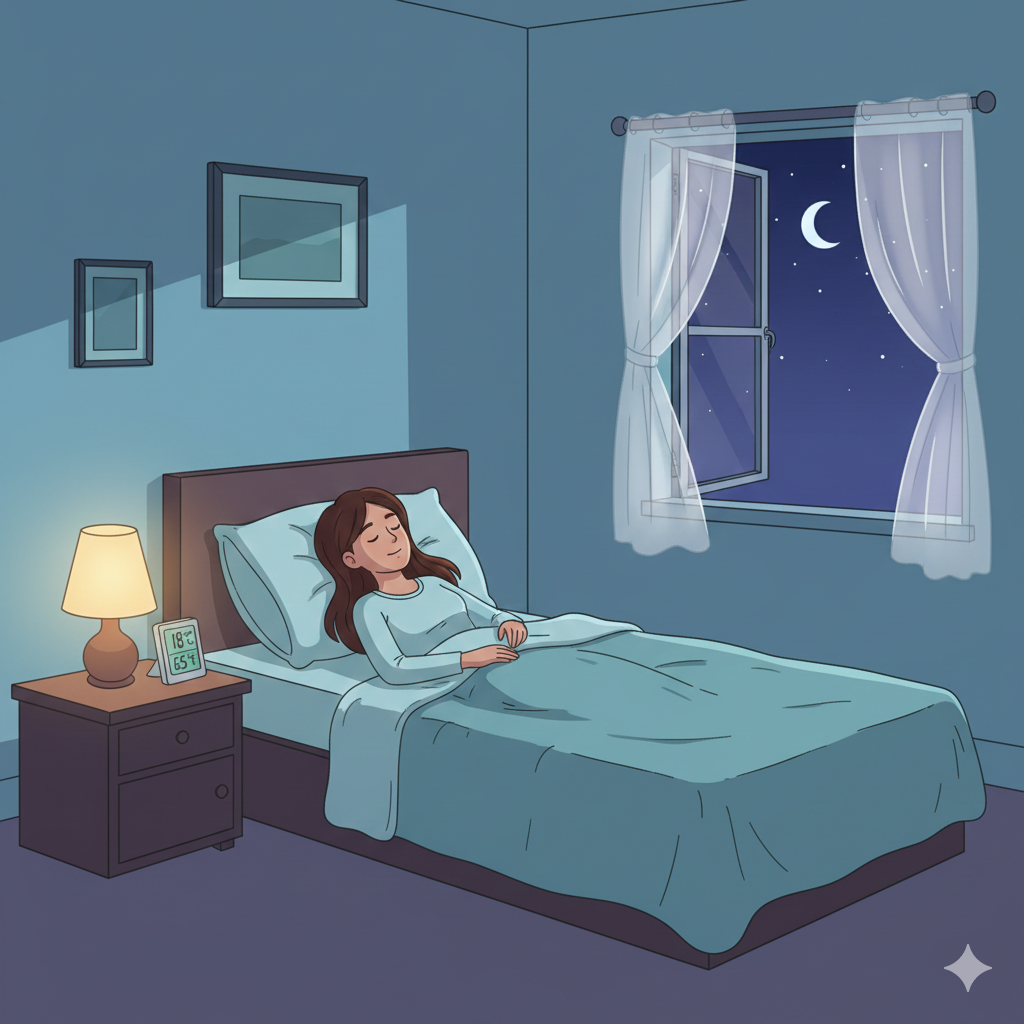
Most sleep research agrees that the optimal bedroom temperature for adults is between 60-67 degrees Fahrenheit (15.6-19.4 degrees Celsius). However, there’s individual variation within this range, and several factors can influence your personal ideal temperature:
Individual Factors:
- Age: Older adults may prefer slightly warmer temperatures
- Gender: Women often prefer temperatures 1-2 degrees warmer than men
- Body composition: People with more muscle mass may run warmer
- Medications: Some medications can affect temperature regulation
- Sleep position: Side sleepers may prefer cooler temperatures than back sleepers
Seasonal Considerations:
- Summer: Aim for the cooler end of the range (60-64°F)
- Winter: You might be comfortable at the warmer end (65-67°F)
- Transition seasons: Be prepared to adjust as outdoor temperatures change
Why Temperature is Especially Critical for Remote Workers
1. Reduced Physical Activity Many remote workers have less incidental movement throughout the day compared to office workers. Without the walk to the parking garage, trips to different floors, or even the basic movement of commuting, your body’s temperature regulation system may be less active during the day. This can make it harder to achieve the natural temperature drop needed for sleep.
Advanced Solution: Incorporate temperature-raising activities into your day:
- Take a warm shower 1-2 hours before bed (the subsequent cooling helps trigger sleepiness)
- Do light exercise earlier in the day to activate your temperature regulation system
- Consider a brief walk outside in the early evening to help your body recognize the natural temperature transition
2. Constant Indoor Environment You’re likely spending 24/7 in your home, relying on your HVAC system for temperature control. This means you have more control—and more responsibility—for ensuring optimal sleep conditions. Unlike office workers who experience different temperature environments throughout the day, remote workers need to be more intentional about creating temperature variation.
Advanced Solution: Create temperature zones in your home:
- Keep your office slightly warmer during the day (70-72°F) to support alertness
- Gradually cool your living spaces in the evening
- Make your bedroom the coolest room in the house
3. Stress and Body Heat Work-related stress can elevate your core body temperature through increased muscle tension and elevated cortisol levels. When you’re stressed, your body produces heat as part of the fight-or-flight response, making it even harder to cool down for sleep.
Advanced Solution: Address stress-related heat through:
- Progressive muscle relaxation before bed
- Breathing exercises that activate your parasympathetic nervous system
- Creating clear boundaries between work and sleep spaces
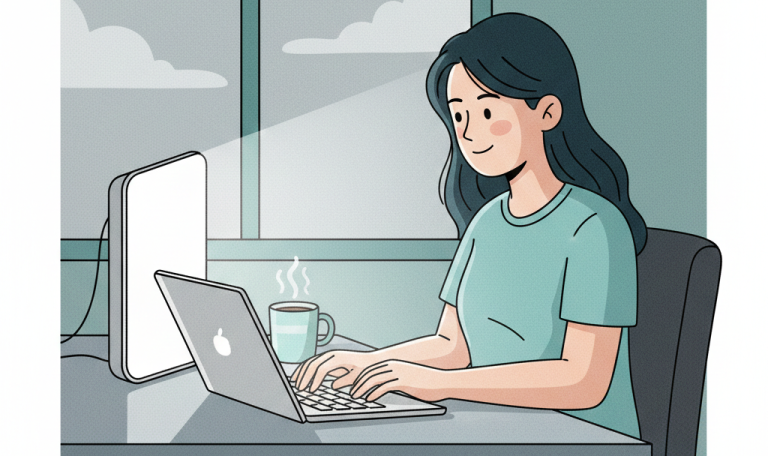
4. Screen Heat and Light Exposure Remote workers often spend more time in front of screens, which generate heat and emit light that can interfere with your body’s natural temperature regulation. The combination of screen heat and blue light exposure can disrupt your circadian temperature rhythm.
Advanced Solution:
- Position screens away from your body to reduce heat exposure
- Use external monitors instead of laptops when possible (laptops generate more heat)
- Implement the screen cutoff from the 3-2-1 rule to allow your body temperature to naturally drop
Advanced Temperature Optimization Strategies
Strategy 1: Smart Thermostat Programming
Basic Setup: Set your thermostat to automatically lower the temperature 1-2 hours before your bedtime.
Advanced Programming:
- Pre-cooling Phase: Start cooling 3 hours before bed, dropping temperature by 2-3 degrees
- Sleep Phase: Maintain your optimal temperature throughout the night
- Wake Phase: Gradually increase temperature 30 minutes before your alarm
Smart Thermostat Recommendations:
- Nest Learning Thermostat [affiliate link]: Learns your schedule and adjusts automatically
- Ecobee SmartThermostat [affiliate link]: Includes room sensors for more precise control
- Honeywell T9 [affiliate link]: Offers geofencing and smart room sensors
Strategy 2: Bedding and Mattress Optimization
Material Science: Different materials have different thermal properties that can significantly impact your sleep temperature:
Sheets:
- Bamboo: Naturally antibacterial and moisture-wicking, cooler than cotton
- Linen: Highly breathable, excellent for hot sleepers
- Percale Cotton: Crisp, breathable weave that sleeps cooler than sateen
- Tencel/Lyocell: Moisture-wicking and temperature-regulating
Avoid: High thread count sateen sheets, which can trap heat despite feeling luxurious
Pillows:
- Memory foam: Can retain heat; look for gel-infused or ventilated options
- Down alternative: Often cooler than natural down
- Buckwheat hull: Excellent airflow and cooling properties
- Shredded memory foam: Better airflow than solid memory foam
Mattress Considerations:
- Memory foam: Can sleep hot; look for gel-infused or plant-based options
- Latex: Naturally cooling and breathable
- Innerspring: Generally sleeps cooler due to better airflow
- Hybrid: Combines the benefits of different materials
Product Recommendations:
- Bamboo Sheet Sets: Cozy Earth Bamboo Sheets [affiliate link] or Ettitude Bamboo Sheets [affiliate link]
- Cooling Pillows: Coop Home Goods Eden Pillow [affiliate link] or Purple Harmony Pillow [affiliate link]
- Cooling Mattress Toppers: Sleep Number DualTemp Layer [affiliate link] or Tempur-Pedic Tempur-Topper Supreme [affiliate link]
Strategy 3: Advanced Airflow and Ventilation
The Physics of Cooling: Moving air feels cooler than still air, even at the same temperature. This is due to the wind-chill effect, where moving air helps evaporate moisture from your skin, creating a cooling sensation.
Ceiling Fans:
- Optimal Speed: Medium speed provides cooling without creating noise that disrupts sleep
- Direction: Counterclockwise in summer to push air down, clockwise in winter to pull air up
- Placement: Position so air flows over the bed without directly hitting your face
Portable Fan Strategies:
- Tower Fans: Quieter than traditional fans, good for consistent airflow
- Bladeless Fans: Ultra-quiet operation, safe for bedroom use
- Oscillating vs. Fixed: Oscillating provides more even cooling, fixed can be positioned for targeted airflow
Cross-Ventilation:
- Window Placement: Open windows on opposite sides of your home to create natural airflow
- Temperature Differential: Works best when outside temperature is at least 5 degrees cooler than inside
- Timing: Most effective in the early morning or late evening
Product Recommendations:
- Ceiling Fans: Hunter Builder Plus [affiliate link] for basic needs, Haiku Home L Series [affiliate link] for smart features
- Tower Fans: Dyson Pure Cool [affiliate link] (combines air purification) or Lasko Wind Curve [affiliate link] (budget-friendly)
- Bladeless Fans: Dyson Pure Cool Link [affiliate link] or Honeywell QuietSet [affiliate link]
Strategy 4: Cooling Technology Solutions
Mattress Cooling Systems: These advanced systems actively regulate your sleep temperature throughout the night:
- Water-Based Systems: Circulate temperature-controlled water through a pad
- Air-Based Systems: Use fans to circulate air through the mattress
- Thermoelectric Systems: Use advanced cooling technology to maintain precise temperatures
Top Cooling System Recommendations:
- Eight Sleep Pod [affiliate link]: Tracks sleep and adjusts temperature automatically
- ChiliSleep OOLER [affiliate link]: Precise temperature control with smartphone app
- BedJet 3 [affiliate link]: Uses air to heat or cool your bed
Cooling Accessories:
- Cooling Pillows: Purple Harmony [affiliate link] or Tempur-Pedic Tempur-Cloud Breeze Dual [affiliate link]
- Cooling Mattress Pads: Sleep Number DualTemp [affiliate link] or Perfect Cloud Cooling Gel [affiliate link]
- Cooling Blankets: Elegear Cooling Blanket [affiliate link] or LUXEAR Cooling Blanket [affiliate link]
Strategy 5: Environmental Controls
Humidity Management: Humidity levels significantly impact how temperature feels. High humidity makes you feel warmer, while low humidity can make you feel cooler.
Optimal Humidity Range: 30-50% for sleep comfort
- Above 50%: Feels warmer, can promote mold growth
- Below 30%: Can cause dry skin and respiratory irritation
Humidity Control Tools:
- Dehumidifiers: Frigidaire 70-Pint [affiliate link] for large spaces, hOmeLabs 4500 Sq Ft [affiliate link] for energy efficiency
- Humidifiers: Levoit Classic 300S [affiliate link] with smart features, Honeywell HCM-350 [affiliate link] for reliability
Air Quality and Temperature: Poor air quality can make you feel warmer and interfere with sleep comfort:
- Air Purifiers: Dyson Pure Cool [affiliate link] (combines cooling and purification) or Coway AP-1512HH [affiliate link] (excellent filtration)
- Plants: Natural air purifiers like snake plants or peace lilies can improve air quality and add moisture
Your Temperature Control Action Plan
Week 1: Assessment and Baseline
Day 1-2: Temperature Monitoring
- Use a digital thermometer [affiliate link] to track your bedroom temperature throughout the night
- Note how you feel at different temperatures
- Pay attention to when you wake up hot or cold
Day 3-4: Personal Comfort Testing
- Try sleeping at 65°F one night, 63°F the next
- Note differences in sleep quality, time to fall asleep, and morning energy
- Track using a sleep diary or app like Sleep Cycle [affiliate link]
Day 5-7: Environmental Assessment
- Check for heat sources in your bedroom (electronics, direct sunlight, poor insulation)
- Assess your current bedding for heat retention
- Evaluate airflow in your bedroom
Week 2: Basic Optimization
Thermostat Adjustment:
- Set your thermostat to 65°F starting 2 hours before bedtime
- If you don’t have central air, use a portable AC unit [affiliate link] like the Frigidaire FFRA0511R1 [affiliate link]
Bedding Upgrade:
- Replace heavy comforters with lighter blankets or cooling comforters
- Consider bamboo or percale cotton sheets if you currently use flannel or sateen
- Try sleeping with minimal clothing to maximize cooling
Basic Airflow:
- Add a fan to your bedroom if you don’t have one
- Open windows when outside temperature is appropriate
- Remove any obstructions blocking air vents
Week 3: Advanced Strategies
Smart Temperature Management:
- Install a smart thermostat if possible
- Program temperature changes throughout the night
- Use smart plugs to control fans automatically
Cooling Accessories:
- Try a cooling pillow or mattress topper
- Experiment with cooling sleepwear or no sleepwear
- Consider a cooling mattress pad if basic changes aren’t enough
Environmental Fine-Tuning:
- Address humidity levels with a dehumidifier if needed
- Block heat sources like electronics or direct sunlight
- Improve insulation if your room doesn’t hold cool air well
Week 4: Optimization and Habit Formation
Data Analysis:
- Review your sleep tracking data from the past 3 weeks
- Identify your personal optimal temperature range
- Note which strategies had the biggest impact
Automation Setup:
- Program your smart thermostat with your ideal schedule
- Set up automated fan controls
- Create evening routines that support temperature management
Seasonal Planning:
- Plan adjustments for different seasons
- Consider how your temperature needs might change
- Prepare backup cooling strategies for heat waves
Troubleshooting Common Temperature Issues
Problem: “I’m Always Too Hot”Solutions:
- Lower your thermostat by 1-2 degrees
- Upgrade to cooling mattress technology
- Check for medical conditions that affect temperature regulation
- Consider your bedding materials and sleepwear
Problem: “My Partner Prefers Different Temperatures”Solutions:
- Use a dual-zone cooling system [affiliate link] like Eight Sleep
- Try different bedding weights on each side
- Consider separate blankets or sheets
- Use targeted cooling like a personal fan
Problem: “Cooling Is Too Expensive”Solutions:
- Focus on free strategies: fans, window management, lighter bedding
- Cool only your bedroom instead of the whole house
- Use a window AC unit [affiliate link] for just the bedroom
- Implement passive cooling strategies like thermal curtains
Problem: “I Wake Up Cold in the Middle of the Night”Solutions:
- Use layers that are easy to adjust
- Set your thermostat to gradually warm up toward morning
- Consider a smart blanket [affiliate link] that adjusts temperature
- Check if you’re overcooling your room
Advanced Tips for Remote Workers
1. Daytime Temperature Strategy:
- Keep your office warmer (70-72°F) during work hours to support alertness
- Take breaks in cooler areas of your home
- Use the temperature differential to reinforce your circadian rhythm
2. Stress and Temperature Management:
- Practice cooling breathing exercises before bed
- Use progressive muscle relaxation to release heat-generating tension
- Consider how work stress might be affecting your temperature regulation
3. Technology Integration:
- Use smart home systems to coordinate lighting and temperature
- Set up voice commands for easy temperature adjustments
- Track your sleep data to optimize your temperature settings
4. Seasonal Adjustments:
- Prepare for temperature changes with seasonal bedding swaps
- Adjust your thermostat schedule as daylight hours change
- Plan for extreme weather with backup cooling strategies
Measuring Your Success
Sleep Quality Metrics:
- Sleep Onset Time: Should decrease as you find your optimal temperature
- Sleep Continuity: Fewer awakenings due to temperature discomfort
- Morning Alertness: Better temperature regulation leads to more restorative sleep
- Daytime Energy: Improved sleep quality translates to better work performance
Comfort Indicators:
- Night Sweats: Should decrease significantly
- Restless Movement: Less tossing and turning due to temperature discomfort
- Blanket Adjustments: Fewer middle-of-the-night temperature corrections
- Partner Satisfaction: If you share a bed, both parties should be comfortable
Long-term Benefits:
- Consistent Sleep Schedule: Proper temperature regulation supports circadian rhythm
- Improved Work Performance: Better sleep leads to better focus and productivity
- Enhanced Recovery: Deeper sleep supports physical and mental recovery
- Reduced Sleep Aids: Less need for medications or supplements when temperature is optimized
The Investment Perspective
Optimizing your sleep temperature is an investment in your productivity and health as a remote worker. While some solutions require upfront costs, consider the return on investment:
Cost-Benefit Analysis:
- Productivity Gains: Better sleep leads to improved focus, creativity, and decision-making
- Health Benefits: Reduced risk of health issues associated with poor sleep
- Reduced Healthcare Costs: Better sleep supports immune function and overall health
- Energy Savings: Targeted cooling of your bedroom can be more efficient than cooling your entire home
Budget-Friendly Priorities:
- Free Changes: Room setup, bedding adjustments, natural ventilation
- Low-Cost Solutions: Fans, basic cooling accessories, thermostat adjustments
- Medium Investment: Smart thermostats, quality bedding, cooling mattress toppers
- High-End Solutions: Advanced cooling systems, smart mattresses, whole-home automation
Conclusion
Mastering your bedroom temperature is a powerful, yet often simple, way to unlock deeper, more restorative sleep as a remote worker. The key is finding your personal optimal temperature range and creating systems that maintain it consistently throughout the night.
Remember that temperature optimization is not a one-size-fits-all solution. What works for your colleague or partner might not work for you. The goal is to experiment systematically, track your results, and gradually refine your approach until you find the perfect temperature environment for your best sleep.
Keep cool, sleep well, and excel at your remote work. Your optimized sleep temperature is a foundation for everything else—your energy, focus, creativity, and overall well-being. When you get this right, you’ll wonder how you ever slept any other way.
The investment in temperature optimization pays dividends not just in better sleep, but in better days. As a remote worker, you have the unique opportunity to control your environment completely. Use that control to create the perfect sleep sanctuary that supports your professional success and personal well-being.