Introduction
You track everything else in your remote work life – project deadlines, billable hours, client communications, even your daily step count. But there’s one metric that might be the most important predictor of your professional success, and you’re probably not paying attention to it: your sleep quality.
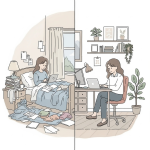
I know, I know. Sleep feels like the opposite of productivity. It’s time when you’re not working, not earning, not achieving. But here’s what I’ve learned after years of working from home and diving deep into sleep research: the quality of your sleep directly predicts the quality of your work the next day. And once you start tracking this connection, you’ll never look at sleep the same way again.
As a remote worker, you’re constantly evaluating your efficiency. Are you hitting your deadlines? Maintaining focus during Zoom calls? Generating creative ideas? While you meticulously track project progress and time spent, there’s one critical metric that often goes overlooked, yet has a profound impact on all the others: your sleep quality. It’s not just about getting enough hours; it’s about the depth and restorativeness of those hours.
The research is clear: there’s a direct, measurable link between how well you sleep and how effectively you work. When you’re well-rested, you’re sharper, more creative, less prone to mistakes, and better equipped to handle stress. The good news? You can start tracking this connection today and unlock your true remote work potential.
The Hidden Cost of Poor Sleep on Remote Work
Before we dive into tracking, let’s talk about what poor sleep is actually costing you as a remote worker. This isn’t just about feeling tired – it’s about measurable impacts on your professional performance and earning potential.
The Cognitive Costs:
- Reduced Processing Speed: Your brain literally works slower when sleep-deprived. Tasks that normally take 30 minutes might take 45 minutes when you’re running on poor sleep.
- Impaired Decision-Making: Sleep deprivation affects your prefrontal cortex, the brain region responsible for executive decisions. You might find yourself procrastinating on important choices or making poor judgment calls.
- Memory Consolidation Issues: If you learned something new yesterday but slept poorly, you might have trouble accessing that information today.
The Emotional Costs:
- Decreased Frustration Tolerance: That difficult client email that you’d normally handle diplomatically? When you’re sleep-deprived, you’re more likely to respond defensively or impatiently.
- Reduced Empathy: Video calls require you to read social cues and respond appropriately. Poor sleep makes this harder, potentially affecting client relationships.
- Increased Anxiety: Sleep deprivation can amplify work-related stress, making challenges feel more overwhelming than they actually are.
The Physical Costs:
- Weakened Immune System: Remote workers who get sick lose days of productivity and might struggle to meet deadlines.
- Slower Reaction Times: This affects everything from typing speed to how quickly you can respond in virtual meetings.
Understanding the Sleep-Productivity Connection
Think of sleep as your brain’s nightly maintenance crew. During quality sleep, your brain:
Consolidates Memories: This isn’t just about remembering facts – it’s about integrating new skills, strengthening neural pathways for tasks you practiced during the day, and making connections between different pieces of information.
Clears Toxins: Your brain has a waste management system called the glymphatic system that becomes more active during sleep. It removes metabolic byproducts that build up during wakefulness, including those associated with brain fog and cognitive decline.
Regulates Mood & Emotions: Sleep helps reset your emotional regulation systems. This is crucial for maintaining professional relationships and managing the stress that comes with remote work isolation.
Restores Focus & Attention: Sleep recharges your prefrontal cortex, the part of your brain responsible for executive functions, decision-making, and sustained attention. This is why you can focus for hours after a good night’s sleep but struggle to concentrate for even 30 minutes when you’re tired.
When sleep quality is poor, these processes are incomplete. You experience:
- Reduced Cognitive Function: Brain fog, impaired problem-solving, and difficulty concentrating on complex tasks.
- Increased Errors: More mistakes in work, leading to rework, missed deadlines, and potential client dissatisfaction.
- Lower Creativity: Difficulty brainstorming new ideas, thinking outside the box, or finding innovative solutions to problems.
- Emotional Volatility: Increased irritability, impatience, and difficulty managing stress – all of which can impact professional relationships.
These aren’t just feelings; they directly translate to lower output, reduced quality of work, and potentially lost income for remote workers.
The Remote Worker’s Sleep Tracking Advantage
Working from home actually gives you a unique advantage in sleep tracking that office workers don’t have: complete control over your environment and schedule. You can optimize your sleep setup, track your patterns more accurately, and immediately implement changes without worrying about commute times or office policies.
How to Track Your Sleep and Productivity: A Comprehensive Guide
You don’t need a sleep lab to start connecting the dots between your rest and your work performance. Here are three approaches, from high-tech to low-tech, that will help you understand your personal sleep-productivity relationship.
Method 1: The Data-Driven Approach (Sleep Tracking Devices)
The Tools: Modern sleep trackers provide incredible insights that were previously only available in research settings. Here’s what different devices offer:
Oura Ring Gen3: Oura Ring is the gold standard for sleep tracking. It measures:
- Sleep stages (REM, deep, light sleep)
- Sleep efficiency (time asleep vs. time in bed)
- Resting heart rate and heart rate variability
- Body temperature variations
- Recovery score that predicts your readiness for the day
Apple Watch Series 8/9: Apple Watch with sleep tracking offers:
- Sleep stage analysis
- Time in bed vs. time asleep
- Respiratory rate during sleep
- Integration with Health app for comprehensive tracking
Fitbit Charge 6: Fitbit provides:
- Sleep score based on multiple factors
- Sleep stages breakdown
- Smart wake feature that wakes you during lighter sleep
- Affordable option with proven accuracy
Whoop Strap 4.0: Whoop focuses on recovery:
- Strain and recovery balance
- Sleep debt calculation
- Personalized recommendations based on your data
- Popular among athletes and high-performers
How to Use the Data:
- Establish Baseline: Wear your device for at least two weeks to understand your normal patterns.
- Look for Patterns: Focus on metrics that correlate with how you feel and perform:
- Sleep efficiency (aim for 85% or higher)
- Deep sleep percentage (15-20% is optimal)
- REM sleep percentage (20-25% is ideal)
- Heart rate variability (higher is generally better)
- Track Variables: Note factors that might affect your sleep:
- Caffeine consumption and timing
- Screen time before bed
- Room temperature
- Exercise timing
- Stress levels
Method 2: The Subjective & Reflective Approach (Daily Productivity Journal)
Sometimes the most valuable insights come from your own observations. This method costs nothing and can provide incredibly personal insights.
Morning Assessment (2 minutes): Each morning, before checking emails or starting work, quickly rate:
- Sleep Quality (1-10): How well do you feel you slept?
- Sleep Quantity: How many hours did you sleep?
- Energy Level (1-10): How energized do you feel?
- Mental Clarity (1-10): How sharp and focused do you feel?
- Mood (1-10): How positive and optimistic do you feel?
Evening Reflection (3 minutes): At the end of your workday, before transitioning to personal time:
- Focus Level (1-10): How easily could you concentrate on tasks?
- Productivity Output: Did you complete your planned tasks? Rate your productivity (1-10).
- Work Quality: How would you rate the quality of your work today?
- Stress Resilience (1-10): How well did you handle unexpected challenges?
- Creative Thinking: Did you have any breakthrough ideas or solve problems creatively?
Weekly Review Questions:
- Which days did you feel most productive? What was your sleep like the night before?
- When did you make the most mistakes? How was your sleep quality?
- What patterns do you notice between your sleep ratings and work performance?
Tool Recommendation: Use a simple app like Day One journal or even a basic notes app to track these metrics. The key is consistency, not perfection.
Method 3: The Integrated Approach (Combining Objective and Subjective Data)
The most powerful insights come from combining device data with personal observations.
Weekly Data Review Process:
- Export your sleep data from your tracking device
- Review your productivity journal entries
- Look for correlations:
- Days with high sleep scores vs. high productivity ratings
- Specific sleep metrics that correlate with your best work days
- Environmental or behavioral factors that contribute to both good sleep and good work
Advanced Tracking Variables:
- Caffeine timing and amount: Track when and how much caffeine you consume
- Screen time before bed: Use apps like Screen Time or RescueTime to monitor evening device usage
- Room temperature: Use a simple thermometer to track bedroom temperature
- Exercise timing: Note when and how intensely you exercise
- Meal timing: Track when you eat your last meal
- Stress levels: Rate your stress at the end of each day
From Data to Action: Boosting Your Productivity Through Sleep
Once you start tracking, you’ll uncover invaluable insights. Here’s how to turn those insights into productivity gains:
Phase 1: Identify Your Personal Sleep-Productivity Patterns (Week 1-2)
Look for:
- Your optimal sleep duration (it might not be 8 hours)
- Which sleep stages correlate most with your best work days
- Environmental factors that consistently impact your sleep
- Timing patterns (do you work better after early bedtimes or later ones?)
Common Discoveries:
- “I need 7.5 hours of sleep, not 8, to feel my best”
- “My productivity crashes when I get less than 90 minutes of deep sleep”
- “I work better when I go to bed by 10 PM, even if I sleep the same number of hours”
Phase 2: Optimize Your Sleep Environment (Week 3-4)
Based on your tracking data, make targeted improvements:
Temperature Control:
- Install a programmable thermostat or use a ChiliPad for precise temperature control
- Track your optimal bedroom temperature (usually 65-68°F)
Light Management:
Sound Optimization:
Sleep Surface:
- If your data shows frequent wake-ups, consider whether your mattress or pillows need upgrading
- The Purple Mattress or Casper offer sleep trial periods
Phase 3: Optimize Your Daily Routine (Week 5-6)
Morning Routine Optimization:
- If your data shows you’re more productive on certain days, what did you do differently those mornings?
- Consider light therapy lamps like the Philips SmartSleep if you’re not getting enough morning light
Evening Routine Refinement:
- Set a “digital sunset” based on your tracking data
- Use blue light blocking glasses like Felix Gray if you must use screens
- Experiment with meditation apps like Headspace or Calm
Caffeine Strategy:
- Track your caffeine intake and timing to find your optimal consumption pattern
- Consider switching to decaf after a certain time based on your sleep data
Phase 4: Advanced Optimization (Week 7-8)
Meal Timing:
- Track how meal timing affects your sleep quality and next-day productivity
- Experiment with your last meal timing
Exercise Timing:
- Use your data to find the optimal workout timing for your sleep and productivity
- Consider whether morning, afternoon, or evening exercise works best for you
Stress Management:
- If your data shows correlation between stress and poor sleep, invest in stress reduction tools
- Consider meditation apps, breathing exercises, or even professional counseling
Troubleshooting Common Tracking Challenges
“My Data is All Over the Place”
- This is normal for the first few weeks. Your body and tracking device are both adjusting.
- Focus on trends over time, not daily variations.
- Consider factors like travel, illness, or major life changes that might affect patterns.
“I Don’t See Any Correlation”
- You might need to track for longer – some patterns only emerge over 4-6 weeks.
- Consider tracking additional variables like hydration, room humidity, or weekend vs. weekday patterns.
- Make sure you’re being consistent with your tracking methods.
“The Numbers Don’t Match How I Feel”
- Your subjective experience is just as important as objective data.
- Some people are more sensitive to sleep changes than others.
- Consider whether your tracker is accurate – try different placement or settings.
Advanced Productivity Metrics to Track
Once you’ve established the basic sleep-productivity connection, you can track more sophisticated metrics:
Cognitive Performance:
- Time to complete routine tasks
- Number of errors in work
- Quality of creative output
- Problem-solving speed
Emotional Intelligence:
- How well you handle difficult client interactions
- Your patience level during long meetings
- Ability to give and receive feedback constructively
Strategic Thinking:
- Quality of long-term planning
- Ability to see big-picture connections
- Innovation and creative problem-solving
The ROI of Sleep Tracking for Remote Workers
Let’s talk numbers. If tracking your sleep and optimizing it based on data helps you:
- Increase your productivity by just 10%
- Reduce errors that require rework by 15%
- Improve client relationships through better emotional regulation
- Decrease sick days by having a stronger immune system
The financial impact can be substantial. For a remote worker earning $75,000 annually, a 10% productivity increase could translate to faster project completion, the ability to take on more clients, or qualify for higher-paying opportunities.
Building Your Personal Sleep-Productivity Dashboard
Consider creating a simple dashboard to visualize your data:
Weekly Metrics:
- Average sleep score
- Average productivity rating
- Correlation coefficient between sleep and productivity
- Key insights or patterns noticed
Monthly Trends:
- How your sleep-productivity relationship is evolving
- Seasonal patterns
- Impact of any changes you’ve made
Tools for Dashboard Creation:
- Notion for a comprehensive tracking system
- Airtable for database-style tracking
- Simple spreadsheet apps like Google Sheets or Excel
Your 30-Day Sleep-Productivity Transformation Plan
Week 1: Assessment
- Choose your tracking method (device + journal recommended)
- Establish baseline measurements
- Don’t change anything yet – just observe
Week 2: Pattern Recognition
- Start identifying correlations
- Note which factors seem to impact both sleep and work
- Begin forming hypotheses about your personal patterns
Week 3: First Optimizations
- Make 1-2 small changes based on your data
- Focus on the highest-impact, easiest-to-implement changes
- Continue tracking to measure impact
Week 4: Refinement
- Analyze the impact of your changes
- Make additional optimizations based on data
- Plan your long-term sleep-productivity strategy
The Long-Term Vision: Sleep as Your Competitive Advantage
Here’s what remote workers who master sleep tracking and optimization report:
Professional Benefits:
- Consistently meeting deadlines without last-minute stress
- Higher quality work that requires less revision
- Better client relationships due to improved emotional regulation
- Increased earning potential through higher productivity
Personal Benefits:
- More energy for personal projects and relationships
- Better physical health and fewer sick days
- Improved mental health and stress resilience
- Greater life satisfaction and work-life balance
Your Next Steps
Start simple. You don’t need to implement everything at once. Pick one tracking method that feels manageable and commit to it for at least two weeks. Most people are surprised by what they discover about their own patterns.
Remember, this isn’t about perfection – it’s about awareness. Once you understand your personal sleep-productivity relationship, you can make informed decisions about when to prioritize sleep and when you might be able to push through a shorter night.
Your sleep isn’t just personal recovery time – it’s professional development. Every hour of quality sleep is an investment in your next day’s success. And for remote workers, who rely entirely on their cognitive abilities and emotional regulation to succeed, quality sleep might be the most important professional skill you can develop.
Start tracking tonight. Your future productivity – and your bottom line – will thank you.