Physical Address
304 North Cardinal St.
Dorchester Center, MA 02124
Physical Address
304 North Cardinal St.
Dorchester Center, MA 02124
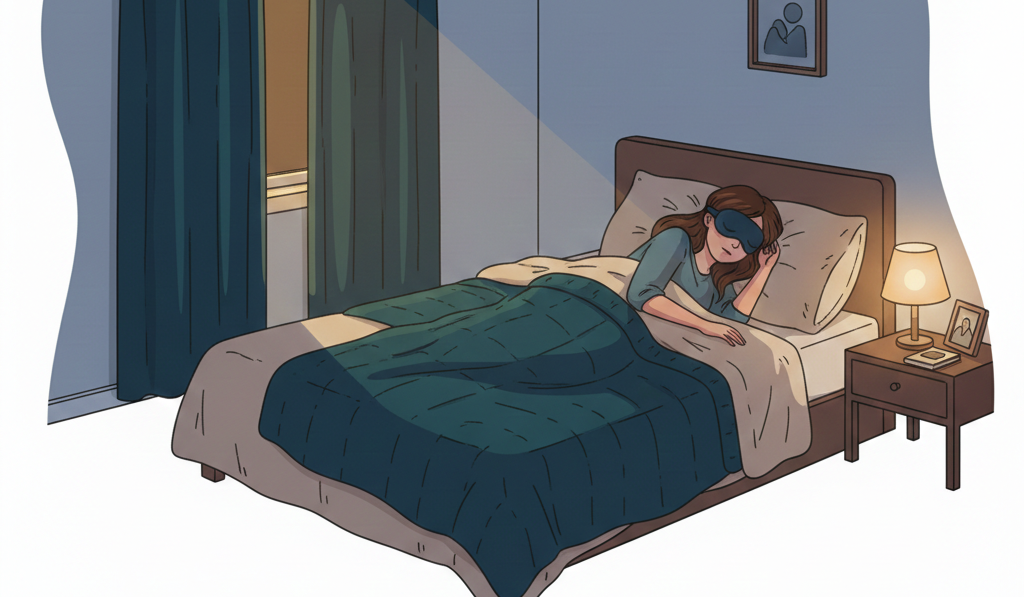
Have you ever noticed how much harder it is to fall asleep when there’s even a tiny bit of light creeping into your room? Maybe it’s the glow from your neighbor’s porch light, the LED display on your cable box, or even that sliver of streetlight peeking through your blinds. What feels like a minor annoyance during the day can become a major sleep disruptor at night.
For remote workers, the challenge of creating a truly dark sleep environment is often more complex than it is for traditional office workers. Your bedroom might double as your office, or your home office might be right next to your bedroom. You might have multiple electronic devices, computer monitors, or work equipment that emit light. Perhaps you’ve set up your workspace near a window for natural light during the day, but now that same window is letting in disruptive light at night.
Here’s what many people don’t realize: your brain is incredibly sensitive to light, even when you’re asleep. Even small amounts of light can interfere with your body’s natural sleep processes, making it harder to fall asleep, stay asleep, and achieve the deep, restorative sleep that leaves you feeling refreshed and ready for a productive workday.
The solution seems simple – block out the light. But when you’re working from home, what’s the best approach? Should you invest in blackout curtains that transform your entire room into a dark sanctuary, or opt for a more personal solution like a sleep mask that travels with you and works regardless of your environment?
Your brain has an internal clock called your circadian rhythm, which regulates when you feel alert and when you feel sleepy. This internal clock is primarily controlled by light exposure. When your brain detects light, it interprets this as a signal to stay awake and alert. When it’s dark, your brain begins producing melatonin, the hormone that makes you feel sleepy.
Here’s the problem: your brain can detect light even through closed eyelids. Research has shown that even dim light – like the glow from a digital alarm clock – can disrupt melatonin production and interfere with your sleep quality.
For remote workers, this is particularly challenging because you might have less exposure to bright natural light during the day (especially if you work in a home office without great natural light), making it even more important to have complete darkness at night to keep your internal clock properly calibrated.
Blackout curtains are exactly what they sound like – window treatments designed to block out virtually all external light. But their benefits for remote workers go beyond just darkness.
Complete environmental control: When you install quality blackout curtains, you’re creating a truly dark environment that benefits everyone in the room. If you share your sleeping space with a partner, both of you benefit from the darkness. If your bedroom doubles as a multi-purpose space, you can create clear “sleep mode” and “work mode” environments.
Circadian rhythm support: Complete darkness helps reinforce your body’s natural sleep-wake cycle. This is especially valuable if you occasionally need to sleep during daylight hours (maybe you’re working with clients in different time zones, or you need to catch up on sleep after a particularly challenging work week).
Visual boundary creation: One of the challenges of working from home is that everything happens in the same space. Blackout curtains can help create a visual cue that separates your “work space” from your “sleep space,” even if they’re the same room.
Temperature regulation: Quality blackout curtains often provide insulation, helping to keep your room cooler in summer and warmer in winter. This can be particularly valuable if your home office gets warm from computer equipment during the day.
Sound dampening: Many blackout curtains also help reduce noise from outside, which can be a significant benefit if you live in a noisy area or your home office is street-facing.
Daytime nap support: If you occasionally need to take a power nap during the day (which can be incredibly beneficial for productivity), blackout curtains make this much more effective.
Initial investment: Quality blackout curtains can be more expensive than other window treatments, especially if you have large windows or multiple windows to cover.
Installation requirements: They need to be properly installed to be effective, and if you’re renting your home, you might need to get permission from your landlord for installation.
Morning light considerations: While blocking light at night is great, you also want to get bright morning light to help set your circadian rhythm. This means you need to remember to open your curtains when you wake up, or consider automatic curtain systems.
Aesthetic considerations: Some blackout curtains can look heavy or institutional, though there are now many attractive options available.
When shopping for blackout curtains, look for ones labeled as “100% blackout” rather than “room darkening.” Make sure they’re wide enough to extend beyond your window frame on both sides, and long enough to go from ceiling to floor if possible. This prevents light from sneaking in around the edges.
Consider curtains with thermal properties if temperature control is also a concern. Some popular options include curtains with foam backing or multiple layers of fabric specifically designed for light blocking.
Top product picks: The Nicetown 100% Blackout Curtains are highly rated for both light blocking and thermal insulation. For a more budget-friendly option, the Utopia Bedding Blackout Curtains offer excellent light blocking at a lower price point. If you prefer a more decorative look, the Deconovo Thermal Blackout Curtains come in multiple colors and patterns while maintaining 100% light blocking capability.
Sleep masks offer a different approach to the darkness problem – instead of changing your entire room, they create darkness just for you, right where you need it most.
Incredible portability: If you’re a digital nomad or frequently travel for work, a sleep mask weighs almost nothing and takes up virtually no space in your luggage. You can create the same dark sleep environment whether you’re at home, in a hotel, or staying with friends.
Immediate darkness: Unlike curtains that you need to close and open, a sleep mask provides instant darkness whenever you need it. This makes them perfect for power naps during the day or those times when you need to sleep while there’s still activity in your home.
Partner consideration: If you share a bedroom with someone who goes to bed at a different time or likes to read in bed, a sleep mask allows you to have darkness while they continue their activities.
Cost-effective: Even high-quality sleep masks are relatively inexpensive compared to outfitting multiple windows with blackout curtains.
Flexibility: You can still benefit from morning light streaming into your room – you just remove the mask when you’re ready to wake up.
Space-saving: If you live in a small space where bulky curtains might make the room feel cramped, a sleep mask provides the benefits of darkness without changing your room’s aesthetic.
Comfort concerns: Some people find sleep masks uncomfortable, especially if they sleep on their side or are sensitive to pressure around their eyes.
Staying in place: Cheaper sleep masks might shift or fall off during the night, defeating the purpose.
Limited scope: A sleep mask only blocks light from reaching your eyes directly – it doesn’t create a dark environment for your entire body or room.
Adjustment period: If you’ve never used a sleep mask before, it might take a few nights to get used to the sensation of wearing something on your face while you sleep.
The key to a good sleep mask is finding one that’s comfortable and stays in place all night. Look for masks with contoured designs that don’t put pressure directly on your eyes. Adjustable straps are important for getting the right fit.
Consider materials carefully – silk masks are gentle on skin and hair, while foam masks might provide better light blocking. Some masks have additional features like cooling gel inserts or aromatherapy pockets.
Recommended options: The MZOO Sleep Mask features a 3D contoured design that prevents pressure on your eyes while providing complete darkness. For those who prefer natural materials, the Slip Silk Sleep Mask is made from 100% mulberry silk and is gentle on skin and hair. The Alaska Bear Natural Silk Sleep Mask offers an affordable silk option with an adjustable strap. For travel, the Tempur-Pedic Sleep Mask is compact and made from the same material as their famous pillows.
The best choice depends on your specific circumstances, and there’s no one-size-fits-all answer. Here’s how to think through your decision:
You have a dedicated bedroom that’s separate from your work space
You share your sleeping space with a partner
You occasionally need to sleep during daylight hours
You want to create a clear visual boundary between work and sleep areas
You’re dealing with noise issues in addition to light issues
You’re planning to stay in your current living situation for a while
You travel frequently for work
You live in a small space where curtains might feel overwhelming
You want the flexibility to nap during the day without darkening your entire room
You’re on a tight budget
You share a bedroom with someone who goes to bed at different times
You rent and can’t make permanent changes to your windows
You want the best of both worlds
You have the budget for both solutions
You travel frequently but also want optimal darkness at home
You occasionally work night shifts or irregular hours
For many remote workers, the most effective approach is actually a combination of both solutions. Here’s why this makes sense:
Use blackout curtains in your primary sleeping space to create the optimal nighttime environment. This gives you complete darkness, temperature control, and noise reduction for your most important sleep – your nightly rest.
Keep a high-quality sleep mask as your backup and travel solution. This ensures you can maintain good sleep hygiene when you’re away from home, need to nap during the day, or are dealing with temporary disruptions to your usual sleep environment.
This layered approach gives you maximum flexibility and ensures you’re never in a situation where light is preventing you from getting quality sleep.
Whichever solution you choose, here are some practical tips for implementation:
For Blackout Curtains:
Measure your windows carefully before purchasing
Consider hiring a professional for installation if you want maximum light blocking
Create a morning routine that includes opening the curtains to get natural light
If you rent, look for tension rod solutions that don’t require permanent installation
Installation made easy: The Kenney Twist & Fit Tension Rod is perfect for renters, requiring no drilling or permanent installation. For more permanent solutions, the Umbra Twilight Room Darkening Curtain Rod extends from 28 to 48 inches and includes all necessary hardware.
For Sleep Masks:
Try before you buy if possible – comfort is highly individual
Give yourself at least a week to adjust to wearing a mask before deciding it’s not for you
Keep your mask clean by washing it regularly according to the manufacturer’s instructions
Consider having a backup mask in case one gets lost or damaged
For Both:
Remember that achieving complete darkness is often a gradual process – start with the biggest light sources and work your way down to smaller ones
Be patient with yourself as you adjust to a darker sleep environment
Consider other sources of light in your room (alarm clocks, electronics, etc.) that might also need to be addressed
Whether you choose blackout curtains, a sleep mask, or both, the most important thing is taking action to create a darker sleep environment. Even small improvements in darkness can lead to noticeable improvements in sleep quality.
Remember, good sleep isn’t a luxury – it’s a necessity for maintaining your health, productivity, and overall well-being as a remote worker. The investment you make in creating optimal sleep conditions will pay dividends in terms of better work performance, improved mood, and better long-term health.
Start with the solution that makes the most sense for your current situation and budget. You can always add additional solutions later as your needs change or your circumstances evolve. The key is to start somewhere and begin experiencing the benefits of truly dark, restorative sleep.