Physical Address
304 North Cardinal St.
Dorchester Center, MA 02124
Physical Address
304 North Cardinal St.
Dorchester Center, MA 02124
Picture this: It’s 6 PM, and you’ve just finished a marathon video call that ran thirty minutes over. Your laptop screen goes dark, but your mind? It’s still racing with tomorrow’s deadlines, that awkward moment in the meeting, and the three emails that came in while you were trying to wrap up. Sound familiar?
If you’re nodding along, you’re not alone. The remote workday often ends abruptly, leaving us mentally stranded between “work mode” and “rest mode.” One moment you’re troubleshooting a client issue, the next you’re expected to seamlessly transition to relaxation – often without even leaving the room where you’ve been working all day.
This jarring transition is more than just inconvenient; it’s actively working against your ability to get quality sleep. Without the natural buffer of a commute or the ritual of leaving the office, your brain doesn’t get the signal that work is truly over. The result? You’re lying in bed at 11 PM, mentally rehearsing tomorrow’s presentation or replaying today’s challenging conversations.
Here’s what many remote workers don’t realize: effective sleep doesn’t just happen when you decide to close your eyes. Quality rest is the culmination of intentional actions taken hours before your head hits the pillow. For those of us working from home, a structured pre-sleep routine isn’t just helpful – it’s essential for creating the clear boundary between work and rest that our brains desperately need.
Your body operates on a natural rhythm that builds “sleep pressure” throughout the day. Think of it like a dimmer switch that gradually turns down your alertness as evening approaches. But here’s the catch: this natural process can be completely overridden by a stimulated nervous system.
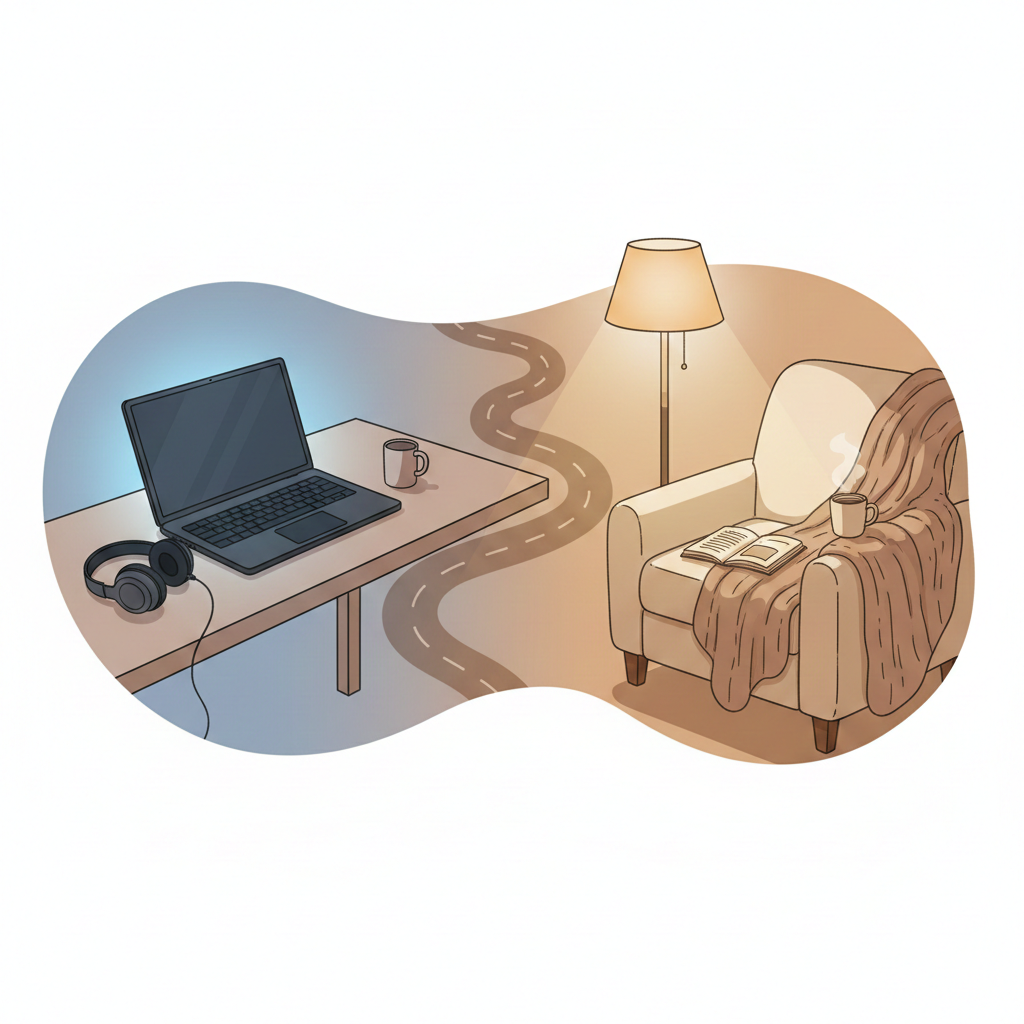
Remote work, with its blurred boundaries and always-on culture, often keeps us in a state of mild alertness throughout the evening. Your laptop might be closed, but your mind is still humming with residual work energy. You’re essentially asking your body to go from highway speed to a complete stop without any deceleration lane.
A well-designed pre-sleep routine acts as that deceleration lane. It’s a series of intentional actions that systematically signal to your brain and body that it’s time to shift gears. This isn’t just about feeling relaxed – it’s about creating the physiological conditions that allow your body to produce sleep-inducing hormones while reducing stress hormones that keep you wired.
The key to success with this routine is timing. Start these steps 60-90 minutes before your desired bedtime, and remember – you don’t need to implement all eight steps at once. Choose 2-3 that resonate most with you and build from there.
What to do: Create a definitive end to your workday. Save all open files, close every program, and ideally, shut down your work computer entirely. Then – and this is crucial – write down 3-5 tasks for tomorrow on a physical piece of paper or in a dedicated notebook.
Why this matters: Without a physical office to leave, remote workers often carry an invisible “work backpack” into their personal time. This mental load includes all the unfinished tasks, half-formed ideas, and lingering concerns from the day. By writing them down, you’re essentially “downloading” these thoughts from your active memory, freeing up mental space for relaxation.
Pro tip: Keep a small notebook by your workspace specifically for this purpose. The physical act of writing (not typing) engages different neural pathways and creates a stronger sense of “putting work away.”
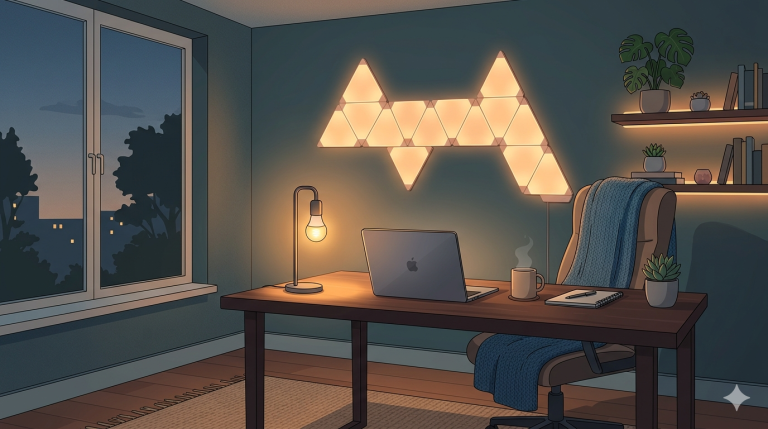
What to do: Switch off bright overhead lights and transition to dim, warm-toned lamps. If your lamps don’t have warm bulbs, consider switching to 2700K bulbs or lower. Turn on night mode settings on all your devices, or better yet, put them in another room entirely.
Why this matters: Your brain uses light as one of its primary cues for determining whether it’s time to be awake or asleep. Bright lights, especially blue light, essentially tell your brain “It’s daytime! Stay alert!” By dimming the lights, you’re allowing your body to begin its natural melatonin production process.
Real-world application: If you must use screens during this time, consider investing in blue light blocking glasses that filter out 99% of blue light. Look for glasses with orange or red-tinted lenses – clear “blue light” glasses often don’t block enough of the problematic wavelengths.
Product recommendations: The Swanwick Blue Light Blocking Glasses are popular for their comfort and effectiveness, while Ra Optics offers premium options with superior blue light filtering. For screen settings, f.lux is a free software that automatically adjusts your computer’s color temperature throughout the day.
What to do: Take a warm (not scalding hot) shower or bath. The temperature should be comfortably warm but not so hot that you feel overheated. Add some Epsom salts or a few drops of lavender essential oil if you enjoy the scent.
Why this works: This step leverages a fascinating aspect of your body’s sleep preparation process. When you get out of the warm water, your body temperature drops relatively quickly. This temperature drop is one of the natural signals your body uses to initiate sleepiness. It’s like giving your internal thermostat a gentle nudge toward sleep mode.
Bonus benefit: The warm water also helps relax muscles that have been tense from sitting at a desk all day, addressing the physical stress that can interfere with sleep.
Product tip: Adding Epsom salts like Dr. Teal’s Pure Epsom Salt can enhance the muscle-relaxing benefits, while a few drops of lavender essential oil can provide additional calming aromatherapy benefits.
What to do: Engage in light, gentle stretches focusing on areas that get tight from desk work – your neck, shoulders, hips, and lower back. This isn’t a workout; think more like a gentle unwinding. Deep breathing exercises or a short, restorative yoga sequence work well too.
Why this helps: After spending hours in a chair, your body often holds tension in ways you might not even notice. This gentle movement helps release that physical tension while also serving as a transition activity that signals the end of your “productive” day.
Simple sequence to try:
Neck rolls (5 in each direction)
Shoulder blade squeezes (10 slow repetitions)
Gentle spinal twists while seated
Hip circles while standing
A few minutes of deep breathing
What to do: Choose a physical book – not an e-reader, tablet, or phone. Pick something engaging but not overly stimulating. This isn’t the time for work-related reading or intense thrillers that might get your heart racing.
Why physical books matter: Reading a physical book engages your mind in a focused but relaxed way, without the sleep-disrupting blue light of screens. The act of turning pages and the tactile experience of holding a book can be surprisingly soothing after a day of digital interactions.
Genre suggestions: Light fiction, memoirs, gentle non-fiction, or even poetry can work well. The key is choosing something that holds your interest without being so exciting that you can’t put it down.
What to do: Write down any lingering thoughts, worries, or random ideas that are floating around in your head. This can be in the same notebook you used for your workday close-out, or a separate journal. Don’t worry about grammar or structure – just get the thoughts out of your head and onto paper.
Why this prevents racing thoughts: Many remote workers experience “racing mind syndrome” once they get into bed. Your brain, finally free from the day’s distractions, starts processing everything at once. By externalizing these thoughts beforehand, you’re giving your mind permission to rest.
What to write about: Anything that’s occupying mental space – concerns about tomorrow, things you’re grateful for, random thoughts, or even just a simple summary of your day.
What to do: Have a small glass of water or a cup of caffeine-free herbal tea. Chamomile, passionflower, or valerian root teas are popular choices for their calming properties. The key word here is “small” – you want to stay hydrated without setting yourself up for middle-of-the-night bathroom trips.
Why timing matters: Staying properly hydrated supports many of your body’s sleep processes, but drinking too much too close to bedtime can disrupt your sleep cycles. This 30-minute window gives your body time to process the fluid while still providing the comfort of a soothing drink.
Create a ritual: Make this into a small ceremony. Use a favorite mug, sit in a comfortable chair, and focus on the warmth and taste of your drink. This mindful approach turns hydration into a relaxation practice.
Product suggestions: Traditional Medicinals Organic Nighty Night Tea is a popular chamomile blend, while Celestial Seasonings Sleepytime Tea offers a gentle, caffeine-free option. For a more luxurious experience, try Harney & Sons Chamomile Tea or Twinings Pure Chamomile .
What to do: Spend a few minutes optimizing your sleep environment. Make your bed if it’s not already made, put away any clutter, ensure your room is at a comfortable temperature (generally 65-68°F is ideal), and eliminate or reduce any sources of light or sound that might disturb your sleep.
Why environment matters: Your physical environment sends powerful signals to your brain about what’s expected to happen in that space. A clean, organized, comfortable bedroom reinforces the message that this is a place for rest and recovery.
Quick checklist:
Phone charging outside the bedroom (or at least across the room)
Comfortable room temperature
Minimal light sources
Comfortable bedding
Clear surfaces and floor
Helpful tools: A digital thermometer like the AcuRite Digital Thermometer can help you monitor your room temperature precisely. For phone charging, consider a charging station [affiliate link] like the Belkin 3-in-1 Wireless Charger that you can place outside your bedroom.
The biggest mistake people make with pre-sleep routines is trying to implement everything at once. This usually leads to feeling overwhelmed and abandoning the routine entirely. Instead, start with just 2-3 steps that appeal to you most.
For example, you might begin with just the workday close-out ritual, dimming the lights, and reading for 15 minutes. Practice these consistently for a week or two until they feel natural, then gradually add more elements.
Remember, the goal isn’t perfection – it’s progress. Even a simplified version of this routine will be infinitely better than going straight from work mode to bed mode without any transition.
“I don’t have 90 minutes to spare”: Start with a 30-minute routine focusing on the workday close-out, light dimming, and one other element that appeals to you.
“My partner goes to bed at a different time”: Adapt the routine to work with your household’s schedule. Many of these steps can be done quietly or in different rooms.
“I work late and need to eat dinner during this time”: That’s perfectly fine. A light, healthy dinner can actually be part of your wind-down routine, as long as you’re not eating heavy or spicy foods that might interfere with sleep.
“Some nights I just can’t stick to it”: That’s normal and expected. The goal is consistency, not perfection. Even implementing parts of the routine on difficult days will be beneficial.
This pre-sleep routine is about more than just getting better sleep (though that’s certainly important). It’s about reclaiming your evenings and creating clear boundaries in a work-from-home lifestyle that often feels like it has no boundaries at all.
When you consistently practice these steps, you’re not just preparing for better sleep – you’re training your brain to recognize that work time is over and personal time has begun. This mental shift can improve not just your sleep quality, but your overall work-life balance and well-being.
Start small, be patient with yourself, and remember that every step toward better sleep is a step toward better overall health and work performance. Your future self will thank you for the investment you’re making in your rest and recovery.